Choosing the right standard nose piercing gauge feels confusing when you first explore piercing sizes because the numbers look upside down and every studio seems to recommend something slightly different. You want your new piercing to heal smoothly and you also want your jewelry to fit with comfort and precision. That’s why understanding nose gauge sizes matters so much. This guide breaks everything down in a simple conversational way so you can make the best choice with confidence.
What Is the Standard Nose Piercing Gauge?
The standard nose piercing gauge most studios use is 18G or 20G. These sizes balance comfort with durability because they feel light yet remain strong enough to avoid bending easily. Many beginners choose 20G because it feels slim and subtle. Others prefer 18G because it offers a little more stability and looks slightly bolder without feeling heavy.
A gauge number tells you how thick the jewelry post is. The gauge system works in reverse so a higher number means a thinner post. That’s why 20G is thinner than 18G. This backward numbering confuses many first timers so don’t worry if it takes a moment to sink in.
Here’s a quick breakdown:
| Gauge Size | Thickness (mm) | Common Use |
| 20G | 0.8 mm | Standard nose piercings, subtle nose studs |
| 18G | 1.0 mm | Standard nose piercings, screw studs, L-shapes |
| 22G | 0.6 mm | Rare, sometimes used for super thin wires |
| 16G | 1.2 mm | Stretched nose piercings, bold rings |
Most professional piercers stick to 18G or 20G for nostril piercings because these sizes heal well and give you plenty of jewelry options.
How Gauge Sizes Affect Healing and Comfort
Your nose piercing gauge size affects how comfortably your piercing heals because thin posts behave differently from thick ones. A thinner gauge like 20G slips through your nose with ease and many people feel the puncture heals a bit faster because there is less tissue disruption. However a thinner post also bends more easily so you need to handle your jewelry with care.
An 18G post offers a stronger structure because the metal is slightly thicker. This helps reduce accidental bending when you sleep or when a towel snags your jewelry. That extra strength supports the piercing during healing especially if you plan to switch jewelry often.
Here are a few healing insights that help you choose wisely:
- Thinner gauges feel more delicate which suits minimalistic jewelry lovers.
- Thicker gauges resist warping which helps your piercing maintain its shape.
- Your anatomy matters because some nostrils handle thicker jewelry more naturally.
A piercer evaluates the thickness of your nostril tissue and discusses your lifestyle so you end up with the perfect fit.
Standard Nose Piercing Gauge vs Nose Shape and Anatomy
Every nose has unique thickness and curvature so the standard nose piercing gauge that works for one person may not feel right for someone else. Some people have narrow nostrils that look best with 20G jewelry because the slim post sits neatly against the tissue. Others have slightly stronger cartilage and feel more comfortable with an 18G piercing that maintains structure.
Think about these factors when selecting your gauge:
- Cartilage firmness
- Nostril shape
- Desired jewelry type
- Skin sensitivity
For example a person with sensitive skin may prefer 18G because thicker metal sometimes reduces friction. Another person might choose 20G because they want a delicate sparkling stud that feels almost weightless.
Different Types of Nose Piercings and Their Standard Gauges
Nose piercings come in multiple styles so the standard nose piercing gauge can vary depending on where the stud or ring sits. Nostril piercings usually follow the 18G or 20G rule. Septum piercings often use thicker gauges like 16G or 14G because the cartilage here requires a stronger post.
Common Nose Piercing Types and Gauges
| Nose Piercing Type | Standard Gauge | Description |
| Nostril Piercing | 18G or 20G | Most common location on the nose |
| High Nostril Piercing | 18G | Slightly higher placement with a cleaner look |
| Septum Piercing | 16G or 14G | Goes through cartilage divider in nostrils |
| Bridge Piercing | 14G | Horizontal piercing across nose bridge |
| Nasallang Piercing | 16G | Complex piercing with three entry points |
Understanding these differences helps you choose jewelry that suits your piercing location and personal style.
Why Most Piercers Prefer 18G or 20G for a Standard Nose Piercing
Studios recommend 18G or 20G because these sizes create a balance between strength and subtlety. You get enough structural support while keeping the piercing delicate and flattering on all face shapes.
Benefits of Using the Standard Nose Piercing Gauge
- Easier healing because the tissue experiences minimal trauma
- Wide jewelry variety including studs, screws, hoops and rings
- Reduced risk of jewelry rejection
- Cleaner look with better adaptability
Piercers avoid extremely thin gauges like 22G because these posts bend easily which causes irritation and slows healing.
Standard Nose Piercing Gauge Jewelry Options
Choosing the right jewelry style adds personality to your piercing and enhances comfort. Different jewelry types work best with specific gauges so knowing your gauge helps you shop without confusion.
Popular Jewelry Styles for 18G and 20G
- L-Shape studs
- Nose screws
- Nose bones
- Hoops and rings
- Segment rings
- Seamless hoops
Each style sits differently on your nostril so think about how each design suits your lifestyle. For example a nose screw stays secure if you move around a lot. A seamless hoop looks elegant and minimalistic which works for everyday wear.
Case Study: Gauge Choices and Real-World Comfort
Imagine two people visiting a piercing studio. One chooses 20G because they want a subtle sparkle. The other picks 18G because they want a sturdier hoop.
Their Experiences
- The 20G wearer loves how light the stud feels. They barely notice it during the day which helps them adjust quickly.
- The 18G wearer appreciates the strong feel of the post. Their hoop keeps its shape even when they change clothes or sleep on their side.
Both heal without any problems because their choices align with their needs and anatomy. This story shows how the right gauge depends on personal comfort and lifestyle.
How to Know Your Current Nose Piercing Gauge
If you already have a piercing you might not remember what gauge your piercer used. The easiest way to identify your gauge is to check old jewelry packaging or ask your original studio. You can also measure your jewelry with a digital caliper although professionals offer the most accurate reading.
If you guess the wrong gauge your new jewelry won’t fit correctly. A smaller gauge might fall out and a larger gauge may not slide through the healed channel.
Can You Stretch a Nose Piercing to a Larger Gauge?
You can stretch a healed nose piercing to a thicker gauge like 18G or 16G but you must do it gradually. Stretching too quickly causes micro tears which lead to irritation. Most people stretch by inserting a slightly thicker taper and then switching to a new piece of jewelry.
Stretching Tips
- Stretch only after the piercing heals completely
- Increase one gauge size at a time
- Use lubrication for smooth insertion
- Never force jewelry
- Listen to your body
Stretching a nose piercing remains safe when done patiently with the right tools.
Recommended Materials for Standard Nose Piercing Gauges
Your skin touches your jewelry all day so selecting high quality materials protects your piercing and reduces irritation. Many piercers recommend implant-grade titanium because it remains lightweight and hypoallergenic. Surgical steel also works well although it contains trace nickel which can irritate sensitive skin.
Top Materials for 18G and 20G Jewelry
- Implant-grade titanium
- Surgical stainless steel
- 14k or 18k solid gold
- Niobium
- Bioflex (for healing phases)
Avoid cheap alloys or costume jewelry because these metals often cause redness or swelling.
How Gauge Impacts Nose Rings and Hoops
When you shop for rings gauge size changes how the hoop sits on your nose. A 20G hoop looks slim and delicate while an 18G hoop feels bold with a stronger circular shape. Both look beautiful so it depends on your style.
Choosing Hoop Diameter
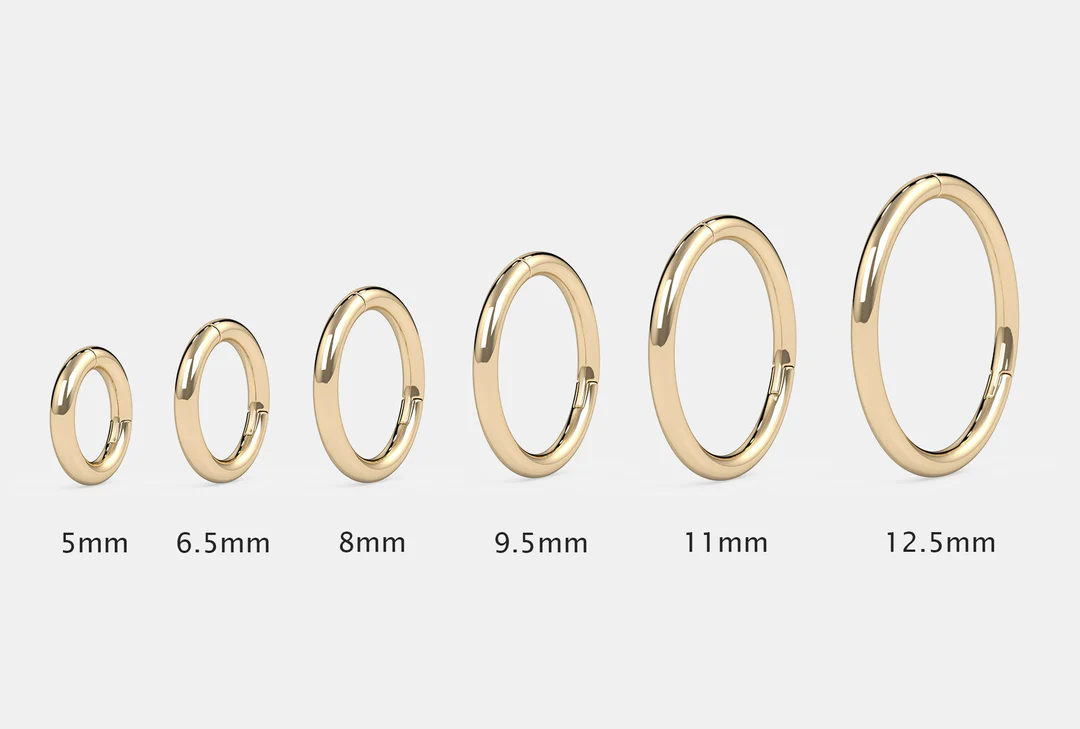
Gauge affects thickness and diameter affects how large the ring appears. Most people choose a 6mm to 8mm diameter depending on their nostril shape.
Frequently Asked Questions About Standard Nose Piercing Gauge
Can I switch from 20G to 18G?
Yes you can switch after healing although the new post may feel snug at first.
Does gauge affect pain?
Most people hardly notice a difference between 18G and 20G during the procedure.
What gauge are nose rings usually?
Most sellers offer rings in 18G or 20G because these match the standard nose piercing gauge used by studios.
Which gauge looks more natural?
20G creates a delicate look while 18G offers a slightly more pronounced style.