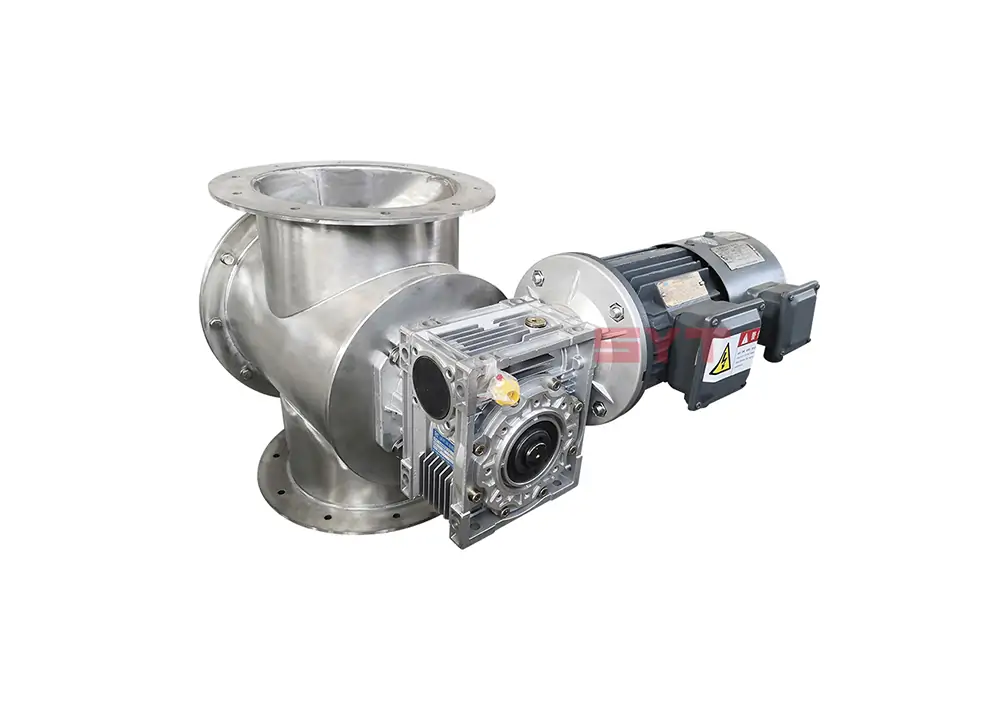
When it comes to handling bulk materials like powders, grains, and granules, one component stands out for its reliability and precision the rotary airlock valve. These valves are vital in many industrial systems, helping control material flow between chambers while maintaining an airtight seal. Whether it’s a cement plant, a food factory, or a chemical production unit, rotary airlock valves play a key role in ensuring efficient and safe material transfer.
In this in-depth guide, you’ll learn everything about rotary airlock valves from how they work to their parts, types, industrial uses, and maintenance tips. Let’s dive in.
What Is a Rotary Airlock Valve?
A rotary airlock valve, also known as a rotary feeder or airlock feeder, is a mechanical device used to control the flow of bulk solids from one chamber to another while maintaining air pressure. It acts as an airlock, preventing air leakage while allowing continuous material discharge.
In simple terms, it’s like a revolving door it lets materials move through while keeping the air on both sides separated. This is essential in systems where air pressure must be maintained, such as pneumatic conveying systems or dust collection setups.
Main functions of a rotary airlock valve:
- Regulate the discharge of dry materials.
- Maintain pressure differentials between chambers.
- Prevent air leakage and dust blowback.
- Enable continuous material handling.
How a Rotary Airlock Valve Works
A rotary airlock valve works by using a rotating rotor inside a housing. The rotor is divided into pockets that carry material from the inlet to the outlet while maintaining a tight air seal.
Step-by-step working:
- Material enters the valve through the inlet port.
- The rotating rotor blades trap the material in pockets.
- As the rotor turns, the pockets move toward the outlet.
- The material discharges through the outlet port while maintaining the air pressure.
- The cycle repeats continuously for smooth operation.
Think of it like a rotating spoon continuously scooping and releasing material but in a sealed chamber that prevents air loss.
Key principle:
Rotary airlock valves balance material flow and air pressure critical for pneumatic conveying systems, dust filters, and hoppers.
Main Parts of a Rotary Airlock Valve
Every rotary valve includes several key components designed for durability and precision. Below are the essential parts:
| Part | Description | Common Material |
| Rotor | Central rotating part with vanes that carry material. | Cast iron, stainless steel |
| Housing | Outer shell that encases the rotor and maintains air seal. | Carbon steel, stainless steel |
| End Plates | Support the rotor and connect to bearings. | Cast iron, aluminum |
| Drive Mechanism | Motor and gearbox that power the rotor. | Varies by design |
| Inlet & Outlet Ports | Allow entry and exit of materials. | Depends on use (round/square) |
Rotor
The rotor is the heart of the valve. Its blades or vanes divide the space into pockets, ensuring smooth material transfer. Precision in rotor-to-housing clearance is crucial to prevent air leakage.
Housing and End Plates
These parts form the outer structure of the valve. They must be strong enough to handle pressure differentials and material abrasiveness.
Drive Mechanism
A motor and gearbox rotate the rotor at a controlled speed. The speed determines how much material passes through the valve per minute.
Inlet and Outlet Ports
Port size and shape affect efficiency. The design ensures that materials enter and exit smoothly without clogging.
Types of Rotary Airlock Valves
Rotary airlock valves come in several types depending on their function and use. Here’s a breakdown:
| Type | Application | Key Feature | Example Industry |
| Drop-Through | Dust collection systems | Gravity-fed discharge | Cement, woodworking |
| Blow-Through | Pneumatic conveying systems | Inline air-assisted discharge | Food, plastics |
| High-Temperature | Handling hot materials | Heat-resistant materials | Power plants |
| Sanitary/Hygienic | Food and pharma | Easy cleaning and disassembly | Dairy, pharmaceutical |
Drop-Through Rotary Airlock Valve
This is the most common type. It allows materials to fall directly through the valve into the next chamber using gravity. Used in dust collection and hopper applications.
Blow-Through Rotary Airlock Valve
Designed for pneumatic conveying, these valves have air or gas passing through them to transport materials through a pipeline. Ideal for fine powders or plastic pellets.
High-Temperature Rotary Valve
Made with heat-resistant materials like stainless steel and coated rotors. These valves handle gases or materials up to 600°F.
Sanitary Rotary Valves
Used in industries where hygiene is critical. They are built with smooth surfaces, stainless steel bodies, and quick-release features for cleaning.
Applications of Rotary Airlock Valves in Industries
Rotary airlock valves are found in almost every industry that handles bulk solids. Here are some common applications:
- Cement and Mining: Control the discharge of cement dust and abrasive materials.
- Food and Beverage: Handle sugar, flour, coffee, or starch.
- Pharmaceutical: Meter powders and granules with precision.
- Plastics: Convey pellets in pneumatic systems.
- Agriculture: Manage feed and grain flow.
- Power Plants: Control ash discharge and dust removal.
Case Study: Cement Industry Application
A cement manufacturing plant used standard feeders, which caused frequent air leaks and material loss. After switching to high-tolerance rotary airlock valves, air pressure loss reduced by 40%, and system efficiency improved by 25%.
Advantages of Using Rotary Airlock Valves
Rotary airlock valves offer several benefits that make them indispensable in bulk handling systems:
- Air Pressure Control: Maintain proper system pressure for efficient conveying.
- Continuous Discharge: Ensure steady, non-stop material flow.
- Dust Control: Prevent material leakage into the atmosphere.
- Versatility: Handle different material types powders, granules, pellets.
- Low Maintenance: Durable and built for long-term performance.
- Energy Efficiency: Optimized design minimizes power use.
Common Problems and Maintenance Tips
Even the best rotary airlock valves need regular maintenance. Below are common issues and how to prevent them.
1. Rotor Wear and Air Leakage
Cause: Abrasive materials or improper clearances.
Solution: Use wear-resistant materials and check clearances regularly.
2. Clogging or Jamming
Cause: Sticky or moist materials.
Solution: Polish internal surfaces and ensure proper venting.
3. Seal or Bearing Failure
Cause: Poor lubrication or misalignment.
Solution: Lubricate bearings periodically and inspect seals for wear.
Maintenance Tips:
- Schedule regular inspections.
- Replace worn-out seals and bearings promptly.
- Keep the rotor clean to prevent material buildup.
- Monitor vibration and temperature for early fault detection.
How to Choose the Right Rotary Airlock Valve
Choosing the right rotary valve depends on your system’s requirements. Here’s what to consider:
| Selection Criteria | Recommendation |
| Material Type | Powders, pellets, granules |
| Air Pressure | Choose valve rated for system pressure |
| Temperature | Use high-temp models for >300°F |
| Valve Size | Match inlet/outlet to material flow |
| Material of Construction | Stainless steel for food/pharma; cast iron for industrial use |
Pro Tip:
Always choose a manufacturer known for precision and durability like DMN-Westinghouse, Prater, or Coperion.
Installation and Safety Guidelines
For best performance, follow these safety and installation practices:
- Mount the valve securely and align it with the pipeline.
- Ensure the drive motor is correctly wired and grounded.
- Check for rotor rotation direction before starting.
- Never open the valve housing while in operation.
- Use guards and safety covers for moving parts.
Innovations and Modern Trends in Rotary Airlock Valves
Modern industries are embracing smart and efficient rotary valve designs. Some new trends include:
- IoT-Enabled Monitoring: Sensors detect temperature, vibration, and wear.
- Energy-Efficient Motors: Reduce power consumption.
- Self-Cleaning Rotors: Prevent clogging in sanitary environments.
- Advanced Coatings: Ceramic and Teflon coatings increase lifespan.
- Quick-Release Designs: For easy cleaning and maintenance.
Conclusion: Why Rotary Airlock Valves Matter
A rotary airlock valve is more than just a mechanical part it’s the heart of every bulk material handling system. It ensures precise flow control, prevents air leakage, and improves overall plant efficiency. Whether you’re handling cement dust, sugar, or plastic pellets, the right rotary airlock valve will keep your system running smoothly, safely, and efficiently.
So when choosing one, focus on material compatibility, design accuracy, and maintenance features they make all the difference in long-term performance.