

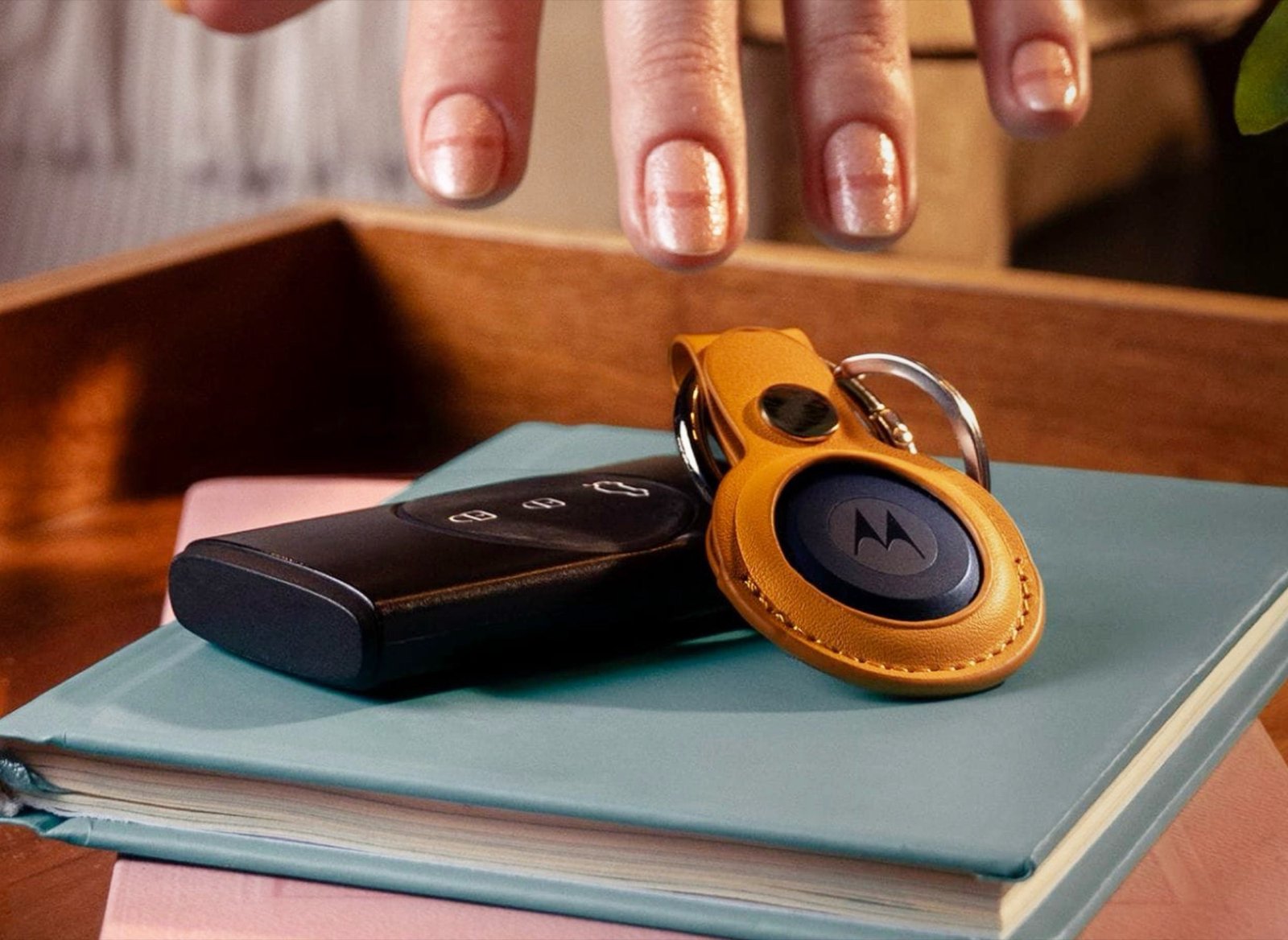
Apple UWB news, Picture this. You’re late for work. Keys are gone vanished into that mysterious dimension where socks and TV remotes also disappear. Instead of tearing apart couch cushions like a raccoon in a dumpster you pull out your iPhone, open Find My, and a directional arrow guides you straight to your keys in eleven seconds flat. That’s Apple UWB technology working exactly as designed and most people have no idea it’s even happening.
Ultra Wideband is one of Apple’s most powerful yet least talked-about technologies. It runs quietly in the background, powering experiences so seamless they feel like magic. But 2025 is shaping up to be the year UWB steps out of the shadows. New chips, new devices, new partnerships, and genuinely exciting Apple UWB news are changing what this technology can do and how central it becomes to the entire Apple ecosystem.
This guide covers everything. What Apple UWB actually is, how it works, what’s new in 2025, and where Apple plans to take it next. Whether you’re a tech enthusiast tracking every Apple development or just someone who wants to understand why their iPhone finds AirTags so precisely you’re in the right place.
What Is Apple UWB Technology — A Quick Refresher
Before diving into the latest Apple UWB news, a quick foundation helps everything else make sense.
Ultra Wideband Explained in Plain English
Ultra Wideband isn’t new technology. The military used it for radar and communications decades before smartphones existed. What’s new is Apple miniaturizing it into a silicon chip small enough to sit inside an iPhone and smart enough to calculate distances with centimeter-level precision.
Here’s the simple version. UWB works by sending billions of tiny radio pulses across an extremely wide frequency spectrum hence the name “ultra wideband.” The system measures exactly how long each pulse takes to travel between two devices. Since radio waves travel at the speed of light, measuring that travel time with nanosecond precision translates directly into distance measurements accurate to within a few centimeters.
Think of it as GPS for indoors. Regular GPS works brilliantly outside because satellites have clear line-of-sight to your device. Indoors, GPS struggles walls, furniture, and interference destroy accuracy. Apple UWB technology doesn’t have this problem. It punches through indoor environments with remarkable precision, delivering location accuracy that Bluetooth and WiFi simply cannot match.
UWB key characteristics:
- Operates across frequencies from 3.1 GHz to 10.6 GHz simultaneously
- Measures distance to within 10 centimeters in ideal conditions
- Extremely low power consumption despite high precision
- Highly resistant to multipath interference — signals bouncing off walls
- Works in real time with minimal processing latency
The multipath resistance is particularly significant. When Bluetooth signals bounce off walls, floors, and furniture, the receiver gets confused it sees the same signal arriving from multiple directions and struggles to calculate accurate distance. UWB’s time-of-flight measurement cuts through that confusion because it identifies the direct signal path regardless of reflections.
Apple’s U1 and U2 Chips — The Hardware Behind UWB
Apple introduced the U1 chip in the iPhone 11 in 2019 marking the company’s first foray into ultra wideband hardware. The U1 was a custom Apple silicon chip designed specifically to enable UWB spatial awareness. At launch it powered a single feature: more accurate AirDrop targeting that prioritized nearby devices you pointed your phone toward.
Modest debut. Enormous foundation.
The U2 chip arrived with the iPhone 15 lineup in 2023, bringing meaningful improvements across every UWB dimension. Longer range. Better accuracy. Lower power consumption. Faster processing. The U2 didn’t just iterate it genuinely expanded what UWB could accomplish, enabling more precise AirTag Precision Finding and laying groundwork for features that are only now reaching users.
Apple UWB chip evolution:
| Chip | Introduced | Key Devices | Primary Improvement |
| U1 | 2019 (iPhone 11) | iPhone 11-14, AirTag, Apple Watch Series 6+ | First UWB implementation |
| U2 | 2023 (iPhone 15) | iPhone 15-16, AirTag 2 (expected) | Extended range, better accuracy, lower power |
| Next Gen (rumored) | 2025-2026 | iPhone 17, future devices | Further range, room-scale awareness |
Current Apple devices carrying UWB chips:
- iPhone 11 through iPhone 16 (all models)
- Apple Watch Series 6 and newer
- AirTag (first generation)
- HomePod (second generation)
- iPad Pro (selected models — limited UWB features)
Apple UWB Features Already in Your Hands
The Apple ultra wideband feature set has grown steadily since 2019. Here’s what’s actively working right now across Apple’s ecosystem.AirDrop Precision Targeting was the original UWB use case. When two UWB-equipped iPhones are nearby, the system uses ultra wideband to identify which specific device you’re pointing toward prioritizing that device for AirDrop sharing. It sounds minor until you’re in a crowded office trying to send a file to one specific colleague among fifteen people.
AirTag Precision Finding is where UWB truly shines for everyday users. When your AirTag is within UWB range roughly 30 to 40 feet your iPhone doesn’t just show a map dot. It shows directional arrows, distance in real time, and haptic feedback that pulses faster as you get closer. Users who’ve experienced this describe it as genuinely magical. That’s not hyperbole. Centimeter-accurate indoor direction finding felt impossible five years ago.
HomePod Handoff uses UWB to detect when you bring your iPhone close to a HomePod. Audio transfers from your iPhone speakers to HomePod automatically no button pressing, no menu navigation. Just walk toward the speaker and the music follows you.Digital Car Keys represent UWB’s most practically significant current application. Supported vehicles let you unlock and start your car with your iPhone or Apple Watch without ever taking the device out of your pocket. UWB verifies your device is inside the car before allowing engine start, preventing relay attacks that plagued older NFC-based keyless entry systems.
Latest Apple UWB News in 2025
Now for the part you actually came here for. Here’s every significant piece of Apple UWB news making waves in 2025.
Apple UWB Chip Roadmap Updates — What’s Coming
Industry analysts and supply chain reporters consistently point toward a significant Apple UWB chip upgrade arriving with the iPhone 17 generation. The next-generation UWB silicon reportedly extends effective range substantially from the current 30-40 foot practical range to potential ranges exceeding 100 feet in open environments.
More importantly, the new chip reportedly enables room-scale awareness — the ability for your iPhone to determine not just where an object is but which room of your home it occupies. Combine that with HomeKit and the implications are enormous. Your iPhone could automatically trigger “I’m in the kitchen” automation scenes, adjust thermostat settings for the room you’re currently occupying, or route audio to the nearest HomePod without any user input.
Reported improvements in next-generation Apple UWB chip:
- Expanded reach up to 2-3 times the existing U2 chip range
- Sub-5 centimeter accuracy in ideal conditions
- 30% reduction in power consumption versus U2
- Multi-device simultaneous ranging tracking multiple UWB devices at once
- Improved performance through obstacles including walls and furniture
- Enhanced angle-of-arrival calculations for 3D spatial positioning
The power consumption improvement deserves particular attention. Lower power draw means UWB can run more continuously in the background without impacting battery life enabling always-on spatial awareness that would drain current devices unacceptably fast.
Apple Vision Pro and UWB Integration News
Apple Vision Pro launched with UWB integration but 2025 brings news of expanded capabilities that push spatial computing significantly forward. The headset uses UWB to understand its precise position relative to nearby Apple devices enabling seamless handoffs and spatial continuity that purely camera-based tracking can’t achieve.
Recent visionOS updates enhanced Vision Pro UWB integration in several meaningful ways. The headset now uses UWB positioning to maintain persistent AR anchors virtual objects stay exactly where you placed them even when you look away and back. Previous versions struggled with anchor drift. UWB positioning eliminates it.“UWB gives Vision Pro a ground truth reference point that camera tracking alone can’t provide. It’s the difference between AR that feels stuck to your screen and AR that feels genuinely attached to the physical world.” Spatial computing developers consistently describe this distinction.The Vision Pro UWB implementation also enables precise device handoff. Start watching a video on your iPhone. Put on your Vision Pro. The content transfers to the headset automatically positioned exactly where your iPhone was because UWB knows the spatial relationship between both devices.
Apple Watch UWB News and Updates
The Apple Watch UWB story in 2025 is one of growing capability. Current Apple Watch models carry UWB hardware but historically used it for limited purposes primarily as a receiver for iPhone UWB signals rather than an independent UWB hub.
That’s changing. Recent watchOS updates expanded Apple Watch UWB functionality to enable independent AirTag finding locating your AirTag using only your Apple Watch without requiring iPhone proximity. For users who exercise without their phone or leave it charging across the house, this is genuinely useful.More significant news: Apple Watch Series 10 reportedly uses UWB for enhanced home automation triggering. Walk into your kitchen wearing Apple Watch the lights adjust, the thermostat shifts, your preferred morning news briefing starts on the nearest HomePod. All triggered by Apple Watch UWB detecting room transitions without any manual input.
Apple Watch UWB current capabilities:
- Precision Finding for AirTags (within UWB range)
- Device handoff triggering with iPhone
- Home automation zone detection
- Car key support on compatible vehicles
- Upcoming: independent AirTag tracking (watchOS update)
iPhone 17 UWB News and Expectations
The iPhone 17 UWB upgrades generate more analyst attention than almost any other feature in the upcoming device. Apple’s supply chain partners reportedly began production of next-generation UWB modules in late 2024 confirming that meaningful hardware changes are coming rather than just software updates.The headline expectation: iPhone 17 will enable room-level positioning throughout a home equipped with multiple UWB anchor points HomePods, Apple TV boxes, and future dedicated UWB beacons. Your phone will know you’re in the living room versus the bedroom versus the kitchen with enough confidence to trigger completely automatic home automation scenes.
For everyday users the practical impact manifests in several ways:
- AirTag Precision Finding works at longer distances and through more obstacles
- Faster and more reliable digital car key response
- More accurate spatial audio positioning in AirPods
- Improved Find My accuracy for all tracked items
- New third-party app capabilities through updated NearbyInteraction framework
iPhone 17 UWB expectations vs iPhone 16:
| Capability | iPhone 16 | iPhone 17 (Expected) |
| UWB Range | ~40 feet | ~100+ feet |
| Positioning Accuracy | ~10cm | ~5cm or better |
| Room Detection | Limited | Full room awareness |
| Multi-device Ranging | Basic | Simultaneous multi-point |
| Power Consumption | Moderate | Significantly reduced |
| Background Operation | Limited | More continuous |
AirTag 2 UWB News — The Next Generation Tracker
It represents one of the most anticipated product updates in Apple’s accessory lineup and Apple UWB news surrounding it suggests substantial capability improvements over the original.The original AirTag uses the U1 chip for Precision Finding within roughly 30-40 feet. AirTag 2 reportedly upgrades to the newer UWB silicon, extending Precision Finding range significantly. Some supply chain reports suggest effective UWB range doubling or even tripling enabling Precision Finding across an entire large home rather than just the same room.
Additional AirTag 2 improvements reported across multiple sources:
- Speakers upgrade — louder audio alert for easier finding in noisy environments
- Battery life extension — improved efficiency from new UWB chip
- Improved anti-stalking features — enhanced unwanted tracking detection
- Vision Pro integration — AirTag location visible in AR overlay through Vision Pro
- Precision Finding in more conditions — better performance through walls and obstacles
The AirTag 2 release timeline remains unconfirmed but analyst consensus points toward a 2025 launch window potentially alongside or shortly after the iPhone 17 release.
Apple UWB Technology Deep Dive — How It Actually Works
Understanding the mechanics of Apple ultra wideband technology transforms it from magic into genuinely impressive engineering.
The Science of Ultra Wideband — Simple Version
UWB operates on a principle called Time of Flight abbreviated ToF. Here’s how it works step by step.
Device A sends a UWB pulse. Device B receives it and immediately sends a response. A measures the round-trip time with nanosecond precision. Since radio waves travel at exactly the speed of light 299,792,458 meters per second knowing the travel time lets the system calculate distance with extraordinary accuracy.One nanosecond of travel time corresponds to roughly 30 centimeters of distance. Apple’s UWB chip measures time intervals far shorter than one nanosecond which is how centimeter-level accuracy becomes achievable.
But distance alone isn’t the whole story. Direction matters too. Apple’s UWB implementation uses multiple antennas positioned at different points within the iPhone’s chassis to calculate Angle of Arrival. By measuring tiny differences in when the UWB pulse reaches each antenna, the system determines the direction the signal came from. Combine distance with direction and you get the three-dimensional spatial awareness that makes Precision Finding feel like a superpower.
UWB vs Bluetooth vs WiFi — Full Comparison:
| Feature | Apple UWB | Bluetooth 5.0 | WiFi 6 |
| Positioning Accuracy | 5–10 centimeters | 1–3 meters | 3–15 meters |
| Effective Range | Up to 200 meters | Up to 100 meters | Up to 300 meters |
| Power Consumption | Low | Very Low | High |
| Primary Purpose | Precision location | Data and audio | Data transfer |
| Indoor Performance | Excellent | Moderate | Moderate |
| Multipath Resistance | Very High | Low | Low |
| Frequency Band | 3.1–10.6 GHz | 2.4 GHz / 5 GHz | 2.4 GHz / 5 GHz / 6 GHz |
| Latency | Very Low | Low | Very Low |
Apple UWB vs Google and Samsung UWB
Apple didn’t invent ultra wideband but they arguably made it mainstream. Google and Samsung both implemented UWB in their flagship devices and the competition has driven the entire technology forward faster than any single company could achieve alone.
Google’s UWB implementation appears in Pixel 6 Pro and newer devices through the Titan M2 chip’s UWB capabilities. Google uses UWB for Nearby Share improvements, Chrome OS device handoffs, and Android’s Fast Pair ecosystem. However Google’s UWB feature set remains narrower than Apple’s primarily because Apple has built a more complete UWB accessory ecosystem through AirTags, HomePods, and digital car keys.Samsung’s UWB implementation in Galaxy S21 Ultra and newer flagships powers Galaxy SmartTag+ finding, digital car keys with select manufacturers, and selected smart home features. Samsung’s UWB is technically capable the hardware is solid but the software ecosystem and third-party adoption lag Apple’s implementation meaningfully.
The FiRa Consortium an industry body developing UWB interoperability standards counts Apple, Google, Samsung, NXP, and dozens of other companies as members. Apple actively participates in FiRa standardization efforts, which benefits users by enabling cross-platform digital car keys and hotel key applications that work regardless of which phone brand you carry.
Apple UWB Ecosystem — Every Product That Uses It
iPhone UWB Support — Complete Device List
Apple UWB iPhone compatibility:
| iPhone Model | UWB Chip | Key UWB Features |
| iPhone 11 / 11 Pro / 11 Pro Max | U1 | AirDrop precision targeting |
| iPhone 12 series | U1 | AirDrop, early AirTag support |
| iPhone 13 series | U1 | AirTag Precision Finding |
| iPhone 14 series | U1 | Improved Precision Finding |
| iPhone 15 series | U2 | Extended range, car keys |
| iPhone 16 series | U2 | Improved spatial awareness |
| iPhone 17 series (expected) | Next Gen | Room detection, extended range |
AirTag and Find My Network UWB
The AirTag Precision Finding experience represents UWB’s most democratized application a $29 tracker that suddenly makes losing things feel almost impossible. The combination of UWB ranging, angle-of-arrival calculation, iPhone camera overlay, and haptic feedback creates an experience that NFC or Bluetooth-only trackers simply cannot replicate.
AirTag vs competitors UWB comparison:
| Tracker | UWB Support | Precision Finding | Range |
| Apple AirTag | Yes — U1/U2 | Full directional | ~40 feet |
| Samsung SmartTag2 | Yes — limited | Basic direction | ~30 feet |
| Tile Pro | No | No — Bluetooth only | N/A |
| Chipolo ONE | No | No — Bluetooth only | N/A |
| AirTag 2 (expected) | Yes — Next Gen | Enhanced directional | ~80-100 feet |
HomePod and Apple TV UWB Integration
Second-generation HomePod carries UWB hardware that enables spatial audio handoff one of the most underappreciated UWB features in Apple’s current lineup. Walk toward a HomePod with music playing on your iPhone and the audio transfers seamlessly. Walk away and it transfers back. The UWB chip handles proximity detection with enough accuracy to make this feel instant rather than delayed.
Apple TV’s UWB status remains officially unconfirmed but persistent rumors suggest upcoming Apple TV hardware will include UWB chips enabling it to serve as a UWB anchor point for whole-home positioning systems. Multiple UWB-equipped devices throughout a home create a positioning mesh that enables room-level accuracy without requiring dedicated hardware.
Apple UWB Real World Applications — What It Means for You
Smart Home Control With Apple UWB
The Apple UWB smart home vision is becoming reality in 2025. Room-aware automation where your home responds to which room you occupy rather than just whether you’re home represents the next frontier of HomeKit integration.
Current UWB-powered home automation capabilities:
- Precise arrival detection — HomePod UWB detects your approach and triggers welcome scenes before you open the door
- Room-level presence — iPhone UWB determines which room you’re in for targeted automation
- Departure detection — more accurate “everyone left home” detection for security and energy saving
- Multi-person awareness — tracking multiple family members’ locations for personalized automation
Practical smart home UWB scenarios:
- Walk into bedroom at 10pm → lights dim to 20%, thermostat drops to 68°F, Do Not Disturb enables automatically
- Enter kitchen in morning → coffee maker starts, morning news plays on nearest HomePod, blinds open
- Leave living room → TV pauses, lights follow you to next room
- Last person leaves home → all lights off, thermostat to eco mode, security system arms
Apple UWB for Car Access and Digital Keys
Apple UWB car keys represent one of the technology’s most practically significant current applications. Over 50 car models now support iPhone digital keys and UWB-equipped models offer a fundamentally superior experience compared to NFC-only implementations.
The UWB advantage in automotive applications is security. Traditional keyless entry systems suffered from relay attacks thieves use signal amplifiers to extend your key fob’s range, tricking your car into thinking the key is nearby when it’s actually inside your house. UWB’s time-of-flight measurement is mathematically impossible to spoof with a relay attack the physics don’t allow it. Your car knows your iPhone is within inches of the door handle rather than 50 feet away being amplified.
Car manufacturers with Apple UWB key support:
- BMW — pioneer of Apple UWB car key integration
- Mercedes-Benz — UWB digital key across multiple models
- Hyundai and Kia — expanding UWB key support
- Genesis — premium models with full UWB integration
- Volkswagen Group — rolling out across brands
- Additional manufacturers announcing support throughout 2025
Retail and Commerce Applications of Apple UWB
Forward-thinking retailers are piloting Apple UWB retail applications that go beyond simple payment processing. Indoor navigation using UWB positioning guides shoppers to specific products within large stores think hardware stores where finding the right aisle for a specific bolt size currently requires either luck or staff assistance.
Apple’s retail ecosystem integration with UWB enables:
- Product location services — “That item is in Aisle 7, Bay 3, second shelf”
- Personalized offers — relevant promotions triggered by which department you’re browsing
- Frictionless checkout — UWB confirms your physical presence for enhanced Apple Pay security
- Staff assistance routing — employees directed to customers who’ve been in one spot for extended periods
Apple UWB Privacy and Security — What You Need to Know
How Apple Protects UWB Data
Privacy concerns follow any location technology and Apple UWB is no exception. Apple’s approach differs fundamentally from competitors: UWB ranging calculations happen entirely on-device. The precise distance and direction measurements never leave your iPhone. Apple’s servers don’t receive your spatial location data.
Apple UWB privacy protections:
- All UWB calculations processed on-device using Apple silicon
- No raw UWB data transmitted to Apple servers
- Location information derived from UWB stays local
- Find My network uses end-to-end encryption for AirTag location reports
- Users control which apps access NearbyInteraction UWB features
UWB Security Features in Apple Devices
Secure ranging Apple’s implementation of encrypted UWB communications prevents malicious devices from spoofing UWB signals to trick your iPhone into thinking an unauthorized device is nearby. Every UWB session uses cryptographic authentication to verify both devices are who they claim to be.
The anti-stalking features in AirTag deserve specific mention. Apple built multiple layers of protection against unwanted tracking:
- iPhones automatically detect unknown AirTags traveling with you
- Alerts notify you if an unregistered AirTag has been near you for extended time
- AirTags emit audible alerts after being separated from their registered owner
- Android users can download Apple’s Tracker Detect app for protection
- Law enforcement cooperation protocols exist for stalking investigations
Regulatory Landscape for UWB Technology
UWB regulations vary significantly by region and directly affect which features Apple can enable globally. The FCC in the United States permits UWB operation across a broad frequency range with power limits that balance performance against interference concerns with other radio services.Europe’s UWB regulatory framework is somewhat more restrictive limiting certain frequency bands and requiring adaptive power control in some scenarios. Apple engineers both regulatory environments into their UWB chip design, ensuring compliant operation across all markets simultaneously.
Apple UWB News — Industry Impact and Partnerships
The FiRa Consortium Fine Ranging Consortium drives global UWB standardization and Apple sits at its core. FiRa’s work ensures that a hotel room UWB digital key works on both iPhone and Android, that car manufacturers implement UWB car keys in ways compatible with multiple phone platforms, and that UWB devices from different manufacturers communicate reliably.Apple’s FiRa participation reflects a strategic reality: a fragmented UWB ecosystem hurts everyone including Apple. If hotels must choose between supporting Apple UWB or Android UWB, many will choose neither. Universal standards mean universal adoption and universal adoption means UWB becomes infrastructure that makes Apple devices more valuable by default.
Apple UWB Partnerships With Car Manufacturers
The automotive UWB partnership news in 2025 continues accelerating. BMW pioneered the Apple UWB car key relationship and continues expanding support across more models. Mercedes-Benz followed with comprehensive UWB integration across their lineup. Korean manufacturers Hyundai, Kia, and Genesis are aggressively expanding UWB key support across price points bringing the technology from luxury flagships to mainstream vehicles.“UWB car keys solve a problem NFC keys couldn’t they work from your pocket, they’re immune to relay attacks, and they know where in the car you are. That last part enables features we’re only beginning to explore.” Automotive technology analysts consistently highlight this distinction.
Third Party Developer Adoption of Apple UWB
Apple’s NearbyInteraction framework the developer API for UWB features has attracted growing adoption since its introduction. Developers building on NearbyInteraction can create apps that know precise distance and direction to other UWB-equipped Apple devices.
Most creative third-party Apple UWB applications in 2025:
- Retail navigation apps — guide shoppers to exact product locations
- Museum audio guides — trigger content based on precise proximity to exhibits
- Manufacturing quality control — verify tool proximity to correct assembly location
- Emergency response — precise responder location in complex building layouts
- Gaming applications — real-world precision location gaming experiences
- Accessibility navigation — indoor wayfinding for visually impaired users
Future of Apple UWB Technology — What’s Next
Apple UWB in Augmented Reality
The convergence of Apple UWB and augmented reality represents perhaps the most transformative application on the horizon. Vision Pro’s spatial computing platform needs persistent, accurate world anchoring the ability to place virtual objects in the real world and have them stay exactly where you put them.UWB provides the ground truth reference that camera-based tracking alone can’t deliver. A virtual sticky note placed on your refrigerator should still be there tomorrow, next week, next month even after you’ve turned the headset off and on dozens of times. UWB anchoring makes that persistence reliable in ways that are computationally impossible with visual tracking alone.
Future Apple AR glasses widely expected later in the decade will depend heavily on UWB for the same spatial anchoring capabilities. The smaller form factor of glasses versus headset makes camera-based tracking even more challenging. UWB’s radio-based positioning becomes even more critical when you can’t fit as many cameras into the device.
Apple UWB for Indoor Navigation
Apple Maps indoor navigation with UWB positioning represents an enormous near-term opportunity. This Maps already includes indoor maps for major airports, shopping malls, and sports venues. Adding UWB-based positioning to that infrastructure would enable turn-by-turn indoor navigation with accuracy that makes “turn left at the gate” actually reliable.The infrastructure challenge is real buildings need UWB anchor points installed to enable precise positioning. However Apple’s strategy of embedding UWB in HomePods, Apple TV boxes, and potentially dedicated beacon hardware means the consumer home market gets covered naturally as Apple product adoption grows. Commercial venues require dedicated deployment but the business case for airports, hospitals, and large retail is compelling.
Predictions for Apple UWB in 2025 and Beyond
Near-term Apple UWB developments to watch:
- iPhone 17 UWB chip upgrade announcement and confirmed specs
- AirTag 2 release with extended UWB range
- HomeKit room-aware automation reaching broader user base
- Additional car manufacturer UWB key partnerships
- Vision Pro visionOS updates expanding UWB spatial anchoring
- Third-party UWB accessory ecosystem growth through MFi program
Long-term Apple UWB trajectory:
| Timeline | Expected Development |
| 2025 | iPhone 17 UWB upgrade, AirTag 2, expanded car keys |
| 2026 | UWB in MacBook and iPad Pro mainstream, indoor navigation beta |
| 2027 | AR glasses UWB integration, whole-home positioning standard |
| 2028 | UWB as primary indoor positioning standard across Apple ecosystem |
| 2030+ | UWB embedded in every Apple device category |
Frequently Asked Questions About Apple UWB
What devices support Apple UWB technology?
Every iPhone from iPhone 11 onward supports Apple UWB. Apple Watch Series 6 and newer carry UWB chips. AirTag uses UWB for Precision Finding. Second-generation HomePod includes UWB hardware. Selected iPad Pro models have UWB capability though with limited current features.
How accurate is Apple UWB positioning?
Current Apple UWB accuracy reaches approximately 10 centimeters in ideal conditions roughly the width of your hand. Next-generation chips rumored for iPhone 17 reportedly push this below 5 centimeters. Real-world accuracy varies based on obstacles, interference, and environmental conditions but remains dramatically better than Bluetooth or WiFi positioning.
Is Apple UWB better than Bluetooth for finding items?
Absolutely and the gap is enormous. Bluetooth can tell you an AirTag is “nearby” with 1-3 meter accuracy and no directional information. Apple UWB tells you the exact distance and precise direction to your item with centimeter accuracy. They’re different tools Bluetooth handles the long-range “is it in this building” question while UWB handles the close-range “where exactly is it” question.
Does Apple UWB work through walls?
Apple UWB performs better through walls than most people expect radio waves penetrate building materials more effectively than light or sound. However walls do reduce effective range and slightly degrade accuracy. Apple’s next-generation UWB chip improvements specifically target obstacle penetration as a key advancement area.
Which iPhone first got UWB technology?
The iPhone 11 launched September 2019 became Apple’s first UWB device. It used the original U1 chip primarily for AirDrop precision targeting. The full Precision Finding experience for AirTags required software updates that arrived with iOS 14.5 in 2021.
Is Apple UWB safe and private to use?
Yes Apple’s UWB implementation processes all ranging calculations on-device with no raw spatial data sent to Apple’s servers. The Find My network uses end-to-end encryption. Users control app access to NearbyInteraction features. The anti-stalking protections in AirTag represent industry-leading safety implementation for consumer tracking devices.
What is the range of Apple UWB technology?
Current Apple UWB range reaches approximately 30-40 feet for reliable Precision Finding. Theoretical maximum range extends significantly further but practical accuracy degrades with distance. Next-generation chips expected in iPhone 17 reportedly extend reliable Precision Finding range to over 100 feet a meaningful real-world improvement for large homes and commercial applications.
Final Verdict — Why Apple UWB News Matters to Every Apple User
Here’s the honest truth about Apple UWB technology: most users interact with it daily without realizing it. Every time Precision Finding guides you to a lost item, every time your car unlocks as you approach, every time audio hands off to your HomePod as you walk by UWB is working invisibly in the background.
But 2025 marks a genuine inflection point. The combination of next-generation chip capabilities, expanding device support, growing third-party developer adoption, and deepening automotive and hospitality partnerships means UWB transitions from a useful background feature to a foundational platform capability.
Key Apple UWB developments to track in 2025:
- iPhone 17 UWB chip specifications and confirmed features
- AirTag 2 launch and extended Precision Finding range
- HomeKit room-aware automation rollout timeline
- Vision Pro UWB spatial anchoring improvements
- New automotive partnerships and model support expansion
- NearbyInteraction framework updates for developers
The users who understand what Apple ultra wideband can do and set up their devices to take full advantage experience an Apple ecosystem that feels genuinely smarter and more responsive than the one most people use. That gap will only widen as 2025 progresses and new UWB capabilities reach devices through hardware launches and software updates.Ultra Wideband started as a military radar technology. Apple turned it into something that helps you find your keys in eleven seconds. Where it goes next is genuinely exciting and 2025 is the year it starts to show its full potential.