When you walk into a gym, it’s easy to assume that all bars are created equal. But if you’ve ever tried a chest press on different machines or setups, you’ve probably noticed that some bars feel lighter or heavier than others. So, how much does the chest press bar weigh really?
The answer isn’t as straightforward as “45 pounds.” The , Chest Press Bar Weigh, depends on the type of bar, machine brand, and mechanical design. Understanding this difference is crucial for accurate progress tracking, strength gains, and avoiding injury. Let’s break it down in detail.
Why Knowing Chest Press Bar Weight Matters
Most gym-goers focus on the weight plates they load but ignore the bar’s weight. Yet, that number matters just as much. Here’s why:
- Progress tracking: You can’t accurately measure strength gains without knowing total resistance.
- Preventing overtraining: Lifting more than you think can lead to muscle strain or shoulder injuries.
- Balanced development: When you know the true load, you can align both sides of your body evenly during chest presses.
According to Dr. Jim Stoppani, a fitness scientist, “Every small variable from bar weight to tempo affects your muscle response. Knowing what you lift ensures your progress is real, not perceived.”
So, before your next session, it’s smart to understand how much that bar really weighs.
Types of Chest Press Bars and Their Average Weights
The term chest press bar can refer to several different tools: a standard Olympic barbell, a Smith machine bar, a fixed barbell, or a selectorized machine handle. Each one varies in actual weight and resistance.
Standard Barbell for Chest Press
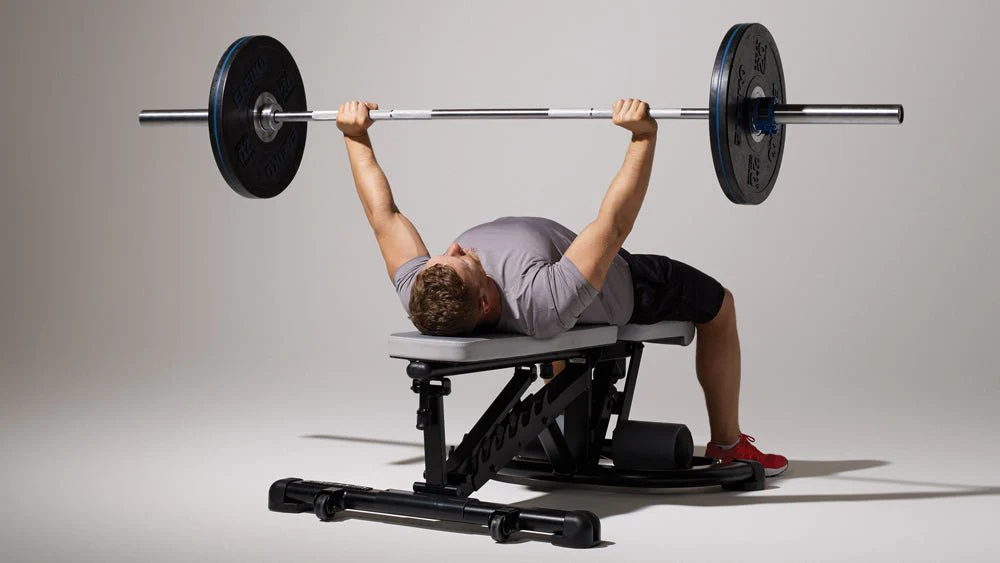
A standard Olympic barbell is what you see on flat benches in most gyms.
- Average weight: 45 lbs (20.4 kg)
- Women’s barbell weight: 35 lbs (15 kg)
- Junior or training bars: 22 lbs (10 kg)
These bars are typically made of high-tensile steel, allowing them to handle heavy loads up to 700 lbs or more in professional gyms.
Quick comparison table:
| Barbell Type | Weight | Length | Typical Use |
| Olympic Barbell | 45 lbs (20 kg) | 7 ft | Standard chest press, competition |
| Women’s Barbell | 35 lbs (15 kg) | 6.5 ft | Female athletes, lighter training |
| Training Barbell | 22 lbs (10 kg) | 5 ft | Beginners, youth training |
For most people, the Olympic barbell is the default “chest press bar.” But once you switch to a Smith machine or cable machine, the numbers change quickly.
Smith Machine Chest Press Bar Weight
A Smith machine guides your movement along steel rails, providing stability and safety. The bar travels vertically or slightly angled, and because of its counterbalance system, it doesn’t always weigh 45 lbs.
Typical Smith machine bar weight:
Between 15 and 25 lbs (7–11 kg)
However, this depends heavily on the brand and model.
| Smith Machine Brand | Average Bar Weight | Counterbalanced? | Notes |
| Life Fitness | 20 lbs | Yes | Smooth movement, light feel |
| Hammer Strength | 25 lbs | No | Heavier, closer to real barbell feel |
| Technogym | 15 lbs | Yes | Designed for functional training |
| Rogue Fitness | 21 lbs | No | Strong steel construction, no assist |
Pro Tip:
If your gym has multiple Smith machines, each bar could weigh differently. Always check the sticker on the frame or ask a trainer before logging your lift.
Chest Press Machine Bar (Selectorized Weight Machines)
Selectorized or cable-based chest press machines (like Nautilus or Cybex) don’t technically use a “bar”they use handles connected to a pulley system.
That means resistance doesn’t directly translate to weight. A machine might display “50 lbs” on its weight stack, but depending on pulley ratios, the actual resistance might be closer to 30–35 lbs.
Example:
- A 2:1 pulley ratio means the listed 50 lbs actually equals 25 lbs of real resistance.
- Different machines have unique mechanical advantages, so your perceived weight changes.
Average effective resistance: 10–70 lbs depending on settings.
Fixed Barbells and EZ Bars for Chest Press
Fixed barbells are the short, pre-weighted bars you’ll find on racks, labeled anywhere from 10 to 55 lbs.
They’re excellent for quick chest workouts or drop sets since you don’t have to load plates.
EZ curl bars, with their bent grips, weigh around 15–25 lbs alone but distribute load differently, reducing wrist strain.
| Bar Type | Weight | Common Use |
| Fixed Barbell | 10–55 lbs | Beginner or quick workouts |
| EZ Curl Bar | 15–25 lbs | Incline or decline chest press variations |
| Short Straight Bar | 20–35 lbs | Seated machine presses |
Factors That Affect the Weight of a Chest Press Bar
Not all bars are created equal even two Olympic bars can differ slightly. Here’s why:
- Bar Length and Diameter:
Longer or thicker bars hold more steel, making them heavier. - Material:
Most are high-tensile steel, but some home gym bars use aluminum or hollow steel to reduce weight. - Brand Design:
Premium brands like Rogue or Eleiko build to tighter tolerances, making weights more consistent. - Counterbalance System:
Smith machines use springs or pulleys to offset the bar’s real weight. - Machine Mechanics:
Pulley or lever ratios can significantly change how heavy a bar “feels” during pressing.
Fun fact:
Some high-end Smith machines even have adjustable counterbalances, allowing you to mimic a 45 lb Olympic bar for more realistic training.
How to Find Out Exactly How Much the Chest Press Bar Weighs
If you want to be precise, here’s how to check your gym’s bar weight:
Step-by-step guide:
- Check manufacturer labels: Look for the machine’s nameplate brands usually list bar weight and max load.
- Use a hanging scale: Remove the bar (if possible) and weigh it using a digital luggage or fish scale.
- Ask your trainer: Most certified trainers know or can check bar specs.
- Search online: Type the machine model + “bar weight” (“Life Fitness Smith machine bar weight”).
Tracking Tip:
Keep a log of all your equipment weights for accurate progress tracking.
| Gym Equipment | Type | Bar Weight | Notes |
| Bench Press | Free Barbell | 45 lbs | Standard |
| Smith Machine | Assisted | 20 lbs | Counterbalanced |
| Seated Press Machine | Cable | 10–70 lbs (varies) | Pulley ratio affects feel |
Comparing Chest Press Bar Weight with Other Bars
Different gym setups create different experiences even with the same plate load. Here’s how common bar types compare:
| Bar Type | Average Weight | Common Use | Feel/Resistance |
| Olympic Barbell | 45 lbs (20 kg) | Bench or chest press | True free weight |
| Smith Machine Bar | 15–25 lbs | Controlled movement | Counterbalanced |
| Fixed Barbell | 10–55 lbs | Accessory work | Pre-set |
| Chest Press Machine | Varies | Selectorized resistance | Pulley-based feel |
For example, if you press 135 lbs on a Smith machine (including a 20-lb bar), your true load is lighter than pressing 135 lbs with a 45-lb free barbell. The difference might seem small, but it affects strength progression over time.
Frequently Asked Questions About Chest Press Bar Weight
Is the Smith Machine Bar Weight Included in the Total Lift?
Yes, Always include the bar weight in your total. For example, if you load two 45-lb plates on a 20-lb Smith bar, your total lift equals 110 lbs. Ignoring bar weight gives false progress numbers.
Does the Chest Press Bar Weight Differ for Men and Women?
Most commercial gyms use the same 45-lb bars for everyone. However, women’s Olympic bars are slightly lighter at 35 lbs with a thinner grip diameter for comfort.
How Much Does a Home Gym Chest Press Bar Weigh?
Chest Press Bar Weigh;
Home setups vary.A gym chest pess bar weighs around 15–25 lbs, while foldable or aluminum bars can be as light as 10 lbs. Always check your model’s manual for exact specs.
Is It Okay to Use Different Bar Types for Chest Workouts?
Absolutely. In fact, alternating between free weights, Smith machines, and fixed bars challenges your muscles differently, improving overall chest development and stability.