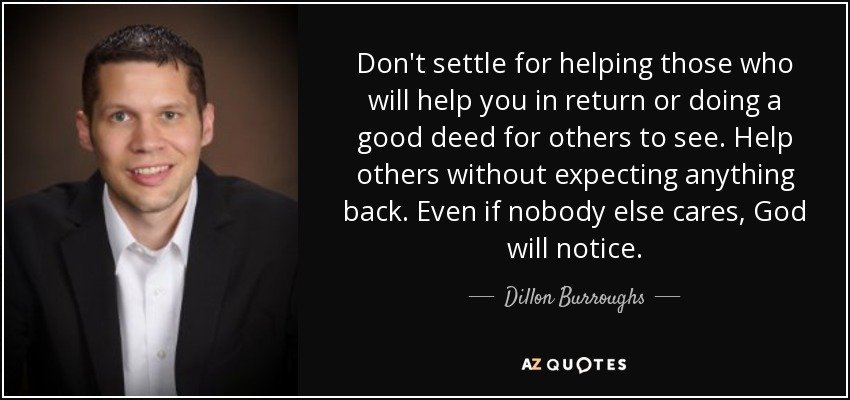
In a world that constantly measures worth through recognition and rewards, true selflessness often feels rare. Yet, the essence of kindness lies in giving without expecting anything in return. Expecting something in return corrupts a good deed it changes the nature of giving from an act of compassion to a transaction of ego. Understanding this distinction helps us uncover the real meaning of morality, empathy, and human connection.
What Does It Mean to Expect Something in Return?
When you help someone, do you secretly hope they’ll return the favor? This simple question reveals how deeply rooted the psychology of reciprocity is in human nature. Expecting something in return doesn’t always mean wanting money or gifts. Often, it’s subtle wanting appreciation, attention, validation, or social status.
Here’s the difference between genuine giving and conditional giving:
| Type of Giving | Core Motivation | Emotional Outcome | True Value |
| Selfless Giving | Compassion and empathy | Inner peace and fulfillment | Spiritually pure |
| Conditional Giving | Expectation of reward or recognition | Frustration or disappointment | Morally diluted |
Human beings naturally crave acknowledgment. However, when ego overshadows intention, kindness loses its authenticity. A good deed done with the thought of “What’s in it for me?” isn’t really about others it’s about the self.
Why Expecting Something in Return Corrupts a Good Deed
A good deed’s worth lies in intention, not the outcome. When your motive shifts from helping others to helping yourself, the deed becomes tainted. Philosophers, religious leaders, and psychologists have long emphasized this truth.
Let’s look at it from different perspectives:
- Moral Philosophy (Kantian Ethics):
Immanuel Kant believed that morality depends on pure intention. If a person does something good for personal gain, the act loses its moral value. - Religious Teachings:
- Christianity: Jesus taught, “Do not let your left hand know what your right hand is doing.” This means acts of charity should remain private, not performed for praise.
- Islam: Charity, or Sadaqah, loses spiritual reward if given for show or recognition.
- Buddhism: True virtue comes from compassion without attachment or desire for reward.
- Hinduism: Karma values pure intention. A deed done without selfish motive adds to spiritual progress.
When you expect returns, your giving becomes a transaction, not a contribution. True generosity cannot coexist with expectation it thrives on detachment.
The Psychology Behind True Altruism
Humans are wired to seek connection and empathy. The empathy-altruism hypothesis, proposed by psychologist Daniel Batson, suggests that genuine empathy leads to true altruism helping others purely for their sake, not your own.
However, in practice, pure altruism is rare. Most people mix genuine care with subtle self-interest. That’s because:
- Helping others releases dopamine and oxytocin, chemicals linked to happiness and bonding.
- Acts of kindness make us feel good about ourselves, which can unintentionally introduce ego.
- Social structures often reinforce “performative kindness”doing good for likes, followers, or reputation.
The real challenge is to recognize these motives and consciously choose compassion over ego.
“The smallest act of kindness is worth more than the grandest intention.” Oscar Wilde
This quote reminds us that authentic kindness needs no audience, applause, or expectation. Its power lies in simplicity.
Religious and Philosophical Views on Selfless Giving
Every major philosophy and faith emphasizes selfless giving as a moral and spiritual virtue.
Christianity
The Bible encourages secret charity. Acts 20:35 states, “It is more blessed to give than to receive.” Giving for recognition diminishes divine reward and spiritual growth.
Islam
Islamic teachings highlight that charity should be done for God’s sake alone. The Qur’an warns that boasting or reminding others of favors invalidates good deeds.
Hinduism and Buddhism
Both traditions link the law of karma to intention. Giving without attachment purifies the soul, while giving for gain binds one to desire and suffering.
Stoicism and Modern Philosophy
Stoics like Epictetus taught that virtue is its own reward. Modern humanist philosophy echoes the same doing good sustains social harmony and personal integrity.
The universal message is clear: selfless giving enriches the soul, while expecting something in return impoverishes it.
The Consequences of Expecting Returns
When people expect something in return for kindness, they often end up disillusioned. Here’s how expectation erodes goodness on multiple levels:
Emotional Consequences
- Leads to resentment when others don’t reciprocate.
- Causes inner conflict between moral duty and personal desire.
- Generates anxiety about being acknowledged or rewarded.
Social Consequences
- Turns relationships into transactions.
- Weakens trust and authenticity.
- Reduces community spirit and empathy.
Spiritual Consequences
- Pollutes the soul with pride and attachment.
- Prevents genuine gratitude and humility.
- Disconnects a person from inner peace and divine satisfaction.
Case Study: The Volunteer Dilemma
A community volunteer spent months organizing events but quit when she wasn’t thanked publicly. Though her work helped many, her expectation of recognition turned her good deeds into a source of bitterness. This is a common modern tragedy good intentions lost to the hunger for validation.
How to Practice Selfless Giving
Becoming truly selfless isn’t about denying human emotion it’s about cultivating awareness and intention. Here are practical ways to give without expectation:
1. Reflect Before Acting
Ask yourself, “Why am I doing this?” If the answer involves acknowledgment or return favors, realign your purpose.
2. Give Anonymously
Anonymous charity removes the desire for recognition. It allows you to focus solely on the act of kindness.
3. Detach From Outcome
Whether people appreciate or ignore your efforts, keep your peace. What matters is your intention.
4. Find Joy in the Act Itself
Train your mind to find satisfaction in the process of giving, not in what follows.
5. Practice Gratitude
Instead of expecting something back, be thankful for the opportunity to help. Gratitude transforms giving into spiritual growth.
Mindset Shifts for Pure Generosity
- Replace “I deserve appreciation” with “I’m grateful I could help.”
- Replace “They owe me” with “It was my choice to give.”
- Replace “No one noticed my effort” with “The universe knows my intention.”
The Real Reward of a Good Deed
The irony is that when you stop expecting, the true reward of kindness finally reveals itself. Science supports this truth research from Harvard University shows that selfless acts boost happiness, lower stress, and improve overall well-being. Kindness activates the brain’s reward center, releasing dopamine and endorphins that promote calm and satisfaction.
Real reward doesn’t come in the form of money, praise, or fame. It comes as:
- Inner peace – the quiet satisfaction of knowing you did the right thing.
- Emotional freedom – detachment from others’ opinions.
- Spiritual elevation – harmony between mind, body, and soul.
“You have not lived today until you have done something for someone who can never repay you.” John Bunyan
True goodness is measured not by how others react, but by the purity of your intention.
Expecting Something in Return Corrupts a Good Deed Final Reflection
The heart of a good deed lies not in the act, but in why it’s done. When you expect something in return, you trade sincerity for selfishness and compassion for control. The path to true goodness is quiet, humble, and unconditional.
Next time you help someone, resist the urge to look back for applause. Let the satisfaction come from within. That’s where the real reward lives the peace of knowing you did something good, purely for the sake of goodness itself.