
How Long Does It Take for Stitches to Dissolve?,Just had surgery and staring at your stitches wondering when they’ll disappear? You’re not alone. This guide answers everything clearly, honestly and without the medical jargon.
What Are Dissolvable Stitches Anyway?
Most people leave the operating room or dental chair with one burning question. Not “did it go well?” they already asked that.The genuine inquiry is “at what time will these items be released?” And if your doctor used dissolvable stitches the answer is a little more nuanced than a simple date on a calendar.
Dissolvable stitches also called absorbable sutures — are a remarkable piece of medical engineering. Unlike traditional stitches that a doctor removes manually your body actually breaks these down on its own. Think of them like a sugar cube sitting in warm water. Slowly and steadily they lose their structure until there’s nothing left to remove. Your immune system and natural tissue fluids do all the work.
The Basic Science Behind Absorbable Sutures
Here’s what’s actually happening beneath your skin. Absorbable sutures are made from materials that your body recognizes as foreign and systematically breaks down through a process called hydrolysis or proteolytic degradation. Hydrolysis means water molecules in your tissue literally cut through the suture material’s chemical bonds. Proteolytic degradation means your body’s enzymes digest the suture like food.
It sounds dramatic. It isn’t. The process is gradual, controlled and designed to align with your natural healing timeline. By the time the suture dissolves your tissue has — ideally — knitted itself back together strongly enough to hold without support.
How Dissolvable Stitches Differ From Regular Stitches
Regular stitches — called non-absorbable sutures — are made from materials like nylon, silk or polypropylene. Your body can’t break these down so a medical professional removes them manually. They’re typically used for surface wounds where removal is straightforward.
Dissolvable stitches go where removal isn’t easy. Deep tissue layers after surgery. Inside the mouth after a tooth extraction. Internal organs. Areas where going back in to remove sutures would cause more trauma than the original procedure.
| Feature | Dissolvable Stitches | Regular Stitches |
| Removal required | No | Yes |
| Used for deep tissue | Yes | Rarely |
| Body breaks them down | Yes | No |
| Common materials | Vicryl, Monocryl, PDS | Nylon, silk, prolene |
| Typical use areas | Internal, oral, obstetric | Skin surface wounds |
What Materials Are Dissolvable Stitches Made From?
Not all absorbable sutures are identical. They come in different materials and each one dissolves at a different rate. The most common types include polyglactin (Vicryl), poliglecaprone (Monocryl), polydioxanone (PDS) and natural catgut. Each serves a specific purpose depending on how long the wound needs support and how deep the closure sits.
Why Doctors Choose Dissolvable Stitches Over Permanent Ones
The logic is straightforward. If a doctor closes deep muscle layers with permanent sutures they’d need a second procedure just to remove them. That means more anaesthesia, more risk and more recovery time. Dissolvable stitches eliminate that entirely. They provide the structural support the wound needs then quietly vanish once their job is done. Efficient, elegant and patient-friendly.
How Long Does It Take for Stitches to Dissolve? The Real Answer
Here’s the honest truth — there’s no single answer that covers everyone. How long it takes for stitches to dissolve depends on the suture type, the wound location and your individual biology. That said there are reliable ranges that give you a solid expectation.
Most dissolvable stitches on the skin surface start breaking down within 7 to 10 days and fully dissolve within 1 to 3 months. Deep internal sutures take considerably longer — sometimes 3 to 6 months or more. And some specialized sutures used in load-bearing tissue can maintain their strength for up to 6 months before fully absorbing.
The General Dissolving Timeline — What Most People Experience
For the average person recovering from a routine procedure here’s what the dissolving process typically looks like week by week:
- Days 1–7: Stitches hold the wound firmly closed. No visible change. Some swelling and tenderness is normal.
- Days 7–14: Surface stitches may begin to loosen slightly. The wound edges start bonding through new collagen formation.
- Weeks 2–4: Stitches visibly thin out. Some may begin to fall away on their own. Itching often peaks during this phase.
- Weeks 4–8: Most surface absorbable sutures have fully dissolved or fallen out. Wound continues strengthening.
- Months 2–6: Deep internal sutures complete their absorption process. No external signs remain.
Why Dissolving Time Varies From Person to Person
Your body isn’t a standardized machine. Two people can receive the exact same suture in the exact same location and experience completely different timelines. Age plays a significant role — younger bodies with robust immune systems and strong circulation tend to absorb sutures faster. Overall health matters too. People managing diabetes, autoimmune conditions or poor circulation often find that both healing and suture absorption take longer than average.
Nutrition is another underrated factor. A body well-supplied with vitamin C, zinc and protein heals faster and processes foreign materials more efficiently. Think of it this way — your immune system needs fuel to do its job and suture absorption is part of that job.
Surface Stitches vs. Deep Internal Stitches — Different Timelines
Surface stitches dissolve faster because they’re exposed to more moisture, movement and environmental factors that accelerate the breakdown process. Deep internal stitches sit in a more stable environment with less mechanical stress but they also need to maintain their strength longer — the deeper tissue takes more time to heal completely.
Dissolvable Stitches Timeline by Suture Type
This is where things get specific. If your doctor told you what type of suture they used — or if it’s on your discharge paperwork — this section gives you a precise timeline to work with.
Catgut Sutures — The Oldest Absorbable Suture
Catgut is actually made from the submucosa of sheep intestines — nothing to do with cats despite the name. It’s one of the oldest suture materials in medical history dating back centuries. Plain catgut dissolves relatively quickly — typically within 70 to 90 days. Chromic catgut is treated with chromium salts to slow absorption extending its lifespan to around 90 to 120 days.
Polyglycolic Acid (PGA) Sutures — Fast Absorbing
PGA sutures absorb through hydrolysis and lose most of their tensile strength within 2 to 3 weeks. Complete absorption typically occurs within 60 to 90 days. They’re commonly used in general soft tissue approximation and ligation.
Poliglecaprone (Monocryl) Sutures — Smooth and Quick
Monocryl is a monofilament suture — meaning it’s a single strand rather than a braided structure. It’s smooth which makes it comfortable and reduces tissue drag. Tensile strength drops significantly within 1 to 2 weeks and complete absorption happens within 90 to 120 days. Doctors frequently use Monocryl for subcuticular skin closures — the type that leaves minimal scarring.
Polyglactin (Vicryl) Sutures — The Most Commonly Used
Vicryl is probably the suture type most people have encountered without knowing it. It’s braided, reliable and widely used across surgical specialties. It retains approximately 65% of its tensile strength at two weeks and about 40% at three weeks. Complete absorption occurs between 56 and 70 days for standard Vicryl and up to 42 days for Vicryl Rapide — a faster-absorbing variant often used in obstetric and skin closure applications.
Polydioxanone (PDS) Sutures — Slow Dissolving for Deep Tissue
PDS is the marathon runner of absorbable sutures. It maintains tensile strength for significantly longer than other types — retaining around 70% strength at two weeks and 50% at four weeks. Complete absorption takes 180 to 210 days. Surgeons use PDS for abdominal wall closures, cardiovascular procedures and anywhere that tissue needs prolonged support during healing.
| Suture Type | Tensile Strength Loss | Complete Absorption |
| Plain Catgut | 7–10 days | 70–90 days |
| Chromic Catgut | 10–14 days | 90–120 days |
| Polyglycolic Acid (PGA) | 14–21 days | 60–90 days |
| Poliglecaprone (Monocryl) | 7–14 days | 90–120 days |
| Polyglactin (Vicryl) | 14–21 days | 56–70 days |
| Vicryl Rapide | 7–10 days | 42 days |
| Polydioxanone (PDS) | 28–42 days | 180–210 days |
How Long Does It Take for Stitches to Dissolve After Surgery?
Different procedures use different suture types in different locations. Here’s a procedure-specific breakdown that directly answers the questions most people search for after leaving the hospital.
Dissolving Stitches After Dental Surgery or Tooth Extraction
The mouth is a uniquely fast-healing environment. Constant moisture, rich blood supply and high enzymatic activity mean that dissolvable stitches after a tooth extraction or oral surgery typically dissolve within 7 to 10 days. Sometimes faster. Patients often notice the stitches loosening and falling away naturally while eating or brushing teeth within the first week.
What to expect after dental dissolvable stitches:
- Days 1–3: The sutures keep the gum tissue securely sealed.
- Days 3–5: Stitches begin softening noticeably
- Days 7–10: Most patients find stitches have dissolved or detached
- Day 14: Complete dissolution in virtually all cases
How Long Do Stitches Take to Dissolve After a C-Section?
A caesarean section involves multiple tissue layers — skin, fat, fascia and uterine muscle. Each layer may receive a different suture type. The uterine closure typically uses Vicryl or similar sutures that dissolve within 56 to 70 days. The fascial layer may use PDS sutures lasting up to 6 months. Skin closure after C-section often uses Vicryl Rapide or Monocryl which dissolve within 3 to 6 weeks.
The external scar continues strengthening for up to 12 months after surgery even after all sutures have fully dissolved.
Dissolvable Stitches After Episiotomy — What to Expect
An episiotomy — a surgical cut made during childbirth to widen the vaginal opening — typically uses Vicryl Rapide sutures for the skin layer and standard Vicryl for deeper tissue. Most women find that the surface stitches dissolve within 2 to 4 weeks. Deeper sutures may take 6 to 8 weeks to fully absorb.
“The perineal area has an excellent blood supply which generally promotes faster healing and suture absorption compared to other body regions.” — General obstetric guidance
How Long for Stitches to Dissolve After General Surgery?
General abdominal surgery involves closing multiple tissue layers with different suture types. Internal organ and peritoneal closures typically use PGA or Vicryl sutures absorbing within 60 to 90 days. Fascial closures often use PDS lasting up to 6 months. Skin closures dissolve within 3 to 6 weeks depending on the suture chosen.
Dissolving Stitches in the Mouth — Faster Than You Think
As mentioned with dental surgery the oral environment accelerates suture absorption dramatically. Saliva contains enzymes that break down suture material faster than the body’s internal fluids alone. Most oral sutures dissolve within 1 to 2 weeks — sometimes in as little as 5 to 7 days for very fine sutures used in delicate oral procedures.
Factors That Affect How Long Stitches Take to Dissolve
Understanding your personal dissolving timeline means looking at the variables that make your situation unique.
Your Age and Overall Health
Age correlates directly with healing speed. Younger patients with healthy immune systems and good circulation absorb sutures faster and heal wounds more efficiently. Older patients — particularly those over 65 — often experience slower absorption and extended healing timelines. Underlying conditions like diabetes, immunosuppression, obesity and cardiovascular disease all slow the process further.
Location of the Wound on the Body
Blood supply drives healing. Areas with rich vascular networks — the face, scalp and oral cavity — heal faster and absorb sutures more quickly. Areas with poorer circulation — the lower legs, feet and extremities — heal more slowly. This is why a facial laceration might heal beautifully in two weeks while a wound on a diabetic patient’s foot takes months.
Infection — How It Changes the Dissolving Timeline
Infection complicates everything. An infected wound creates an inflammatory environment that can actually accelerate suture breakdown in some cases — not because healing is going well but because the infection is chemically attacking the suture material. Paradoxically this leaves the wound without structural support before it’s ready to hold itself together. This is one of the most dangerous complications of post-surgical infection.
Signs of infection around dissolving stitches:
- Increasing redness spreading outward from the wound
- Warmth and swelling that worsens rather than improves after day 3
- Pus or cloudy discharge from the wound
- Fever above 38°C (100.4°F)
- Wound edges separating rather than holding together
- Foul odour from the wound site
Moisture and Wound Care Habits
Wounds that stay appropriately moist — not waterlogged but not dried out — heal faster and absorb sutures more predictably. Keeping a wound too dry can slow the hydrolysis process that breaks down suture material. Keeping it too wet can soften sutures prematurely and weaken the closure before tissue has fully bonded.
Signs Your Dissolvable Stitches Are Dissolving Normally
Knowing what normal looks like saves a lot of anxiety. Here’s what the healthy dissolving process actually involves.
What Normal Dissolving Looks Like
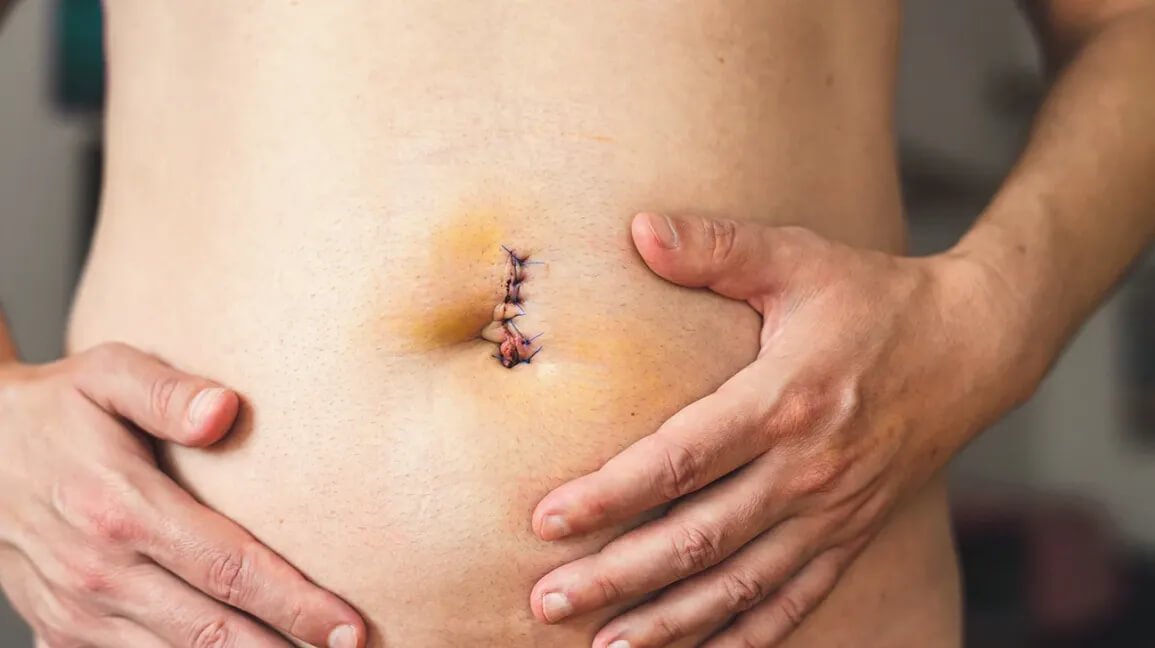
As absorbable sutures break down they typically become thinner and less taut. You might notice them looking frayed or slightly discolored — this is completely normal. Surface sutures may begin to loosen and the ends might stick out slightly from the skin. Some sutures fall away in small pieces. Others seem to simply disappear without any visible shedding.
The Itch Factor — Why Dissolving Stitches Itch
Itching is one of the most universally reported experiences during suture dissolution and wound healing. It happens because your body is actively repairing tissue — nerve endings regenerate, new collagen forms and the suture material triggers a mild immune response. All of this creates that maddening itch that seems to peak right around weeks two to four.
Don’t scratch. Seriously. Scratching can disrupt the wound, introduce bacteria and pull out sutures before the tissue beneath is ready. If the itch is unbearable try a cold compress or ask your doctor about appropriate antihistamines.
Is It Typical to Observe Stitches Emerging?
Yes — completely. It’s actually a sign that the process is working. Sutures don’t always vanish invisibly. Sometimes they loosen, poke through the skin surface and fall away during normal activities like showering or changing dressings. If a suture falls out and the wound edges remain closed and healthy that’s exactly what’s supposed to happen.
Warning Signs — When Dissolving Stitches Are NOT Normal
Most dissolving stitch experiences are uneventful. But knowing the red flags means you catch problems early.
What If Stitches Aren’t Dissolving After Months?
Some sutures — particularly PDS — legitimately take up to six months to fully absorb. If you’re within that window there’s likely nothing wrong. However if you notice hard knots under the skin, persistent inflammation or a small draining sinus (a tiny tunnel that oozes fluid) forming near an old suture site that could suggest a suture granuloma, which is a localized immune response to the material used in the suture. This is treatable but requires medical attention.
When to Call Your Doctor
Call your doctor if you notice:
- Wound edges separating (dehiscence)
- Heightened discomfort after the third day instead of diminishing.
- Signs of infection as listed above
- A hard lump forming at the suture site after weeks
- Sutures that show zero signs of dissolving after 4 months
- Any suture that appears to be cutting through the skin tissue
How to Care for Dissolving Stitches to Speed Up Healing
Effective management of wounds not only staves off infections but also promotes faster recovery and assists stitches in functioning correctly.
Keeping the Wound Clean — The Right Way
Clean the wound gently with mild soap and water once daily. Avoid hydrogen peroxide or iodine on healing wounds — despite their reputation as wound cleaners both can actually damage the new tissue cells trying to form.Gently pat the area dry using a fresh towel or gauze. Don’t rub.
Foods That Promote Faster Healing
What you eat directly impacts how fast your wound heals and your sutures absorb. Focus on:
- Protein — chicken, fish, eggs, legumes — essential for collagen synthesis
- Vitamin C — citrus, bell peppers, strawberries — critical for wound repair
- Zinc — nuts, seeds, whole grains — supports immune function
- Iron — red meat, spinach, lentils — maintains oxygen delivery to healing tissue
- Vitamin A — sweet potato, carrots, leafy greens — promotes cell growth
Do’s and Don’ts With Dissolving Stitches
| Do | Don’t |
| Keep the wound clean and dry initially | Submerge in pools or baths until cleared |
| Follow your doctor’s dressing instructions | Pick at or scratch the stitches |
| Eat a protein-rich healing diet | Smoke — it dramatically slows healing |
| Watch for infection signs daily | Apply hydrogen peroxide or iodine |
| Stay hydrated | Do heavy exercise that strains the wound |
| Ask your doctor before swimming | Try to remove stitches yourself |
Should You Remove Dissolving Stitches Yourself?
The short answer is no. The longer answer is still no — but with context. If a single stitch has clearly dissolved and is hanging loose it’s generally safe to trim the end with clean scissors. But pulling at sutures that haven’t fully dissolved risks reopening the wound before the tissue beneath is ready. When in doubt leave it alone and let your doctor take a look.
Case Study: Dissolvable Stitches in Real-World Healing Scenarios
Case Study 1: Dental Extraction — 28-Year-Old Female
A healthy 28-year-old underwent surgical removal of all four wisdom teeth under general anaesthesia. The oral surgeon used chromic catgut sutures at each extraction site. By day 5 the patient noticed the stitches loosening during meals. By day 9 all four suture sites had fully dissolved with no manual removal required. Healing was complete and uneventful.
Key takeaway: The oral environment dramatically accelerates dissolution — even sutures rated for 90 days can dissolve within 1 to 2 weeks in the mouth.
Case Study 2: C-Section — 34-Year-Old Female
A 34-year-old underwent an emergency caesarean section. The surgeon used PDS sutures for the fascial layer and Vicryl Rapide for the skin closure. The skin stitches dissolved completely within 3 weeks. The deeper fascial sutures took approximately 4 months to fully absorb. The patient experienced one episode of localized inflammation at month 2 which resolved without intervention.
Key takeaway: Multiple suture types in one procedure means multiple dissolving timelines — understanding this prevents unnecessary anxiety when some sutures persist longer than others.
Case Study 3: Abdominal Hernia Repair — 58-Year-Old Male Diabetic
A 58-year-old male with Type 2 diabetes underwent laparoscopic hernia repair. Vicryl sutures were used internally. Due to his diabetes and reduced circulation the sutures took approximately 4 months to fully absorb — nearly double the standard timeline. No infection occurred but healing was slow and required careful monitoring.
Key takeaway: Underlying health conditions like diabetes significantly extend both healing and suture absorption timelines.
Frequently Asked Questions About How Long Stitches Take to Dissolve
Do Dissolvable Stitches Fall Out or Just Disappear?
Both — depending on location. Surface sutures often loosen and fall away in pieces during normal activities. Internal sutures typically absorb completely without any visible evidence. Either way the result is the same — no manual removal needed.
Can Dissolvable Stitches Cause Scarring?
Any wound closure carries some scarring potential. However dissolvable sutures placed beneath the skin surface — like subcuticular Monocryl closures — actually minimize surface scarring compared to traditional skin sutures that leave stitch marks. The suture material itself doesn’t cause scarring but the wound it’s closing naturally forms some scar tissue as it heals.
What Color Are Dissolvable Stitches?
It varies by type. Vicryl sutures are typically violet or undyed (clear/white). Monocryl is usually clear or undyed. PDS comes in violet. Chromic catgut has a brown appearance. Color doesn’t indicate anything about dissolving speed — it’s simply a manufacturing characteristic to help surgeons identify suture type during procedures.
Do Dissolvable Stitches Smell as They Dissolve?
Sometimes. A subtle scent may arise as the stitching material deteriorates — especially with catgut stitches. However a strong or foul smell is a red flag for infection and warrants immediate medical attention. Normal suture dissolution shouldn’t produce any noticeable odour.
Can I Pull Out a Dissolvable Stitch That’s Hanging?
If a suture end is clearly loose and hanging like a thread poking above the skin surface you can trim it carefully with clean nail scissors without pulling. Never tug or pull at sutures. The visible portion may be attached to deeper tissue that isn’t ready to release yet.
Final Thoughts — Patience Is the Best Medicine
Here’s the bottom line. How long it takes for stitches to dissolve depends on the suture type, where it is in your body and your individual health. Most surface stitches dissolve within 1 to 3 months. Deep internal sutures can take up to 6 months. And oral sutures often vanish within a week or two.
The process isn’t always neat or invisible. Sometimes stitches itch maddeningly and they fall away in pieces. Sometimes they seem to linger far longer than you expectedTypically, that is entirely usual.
Quick reference — dissolving stitches summary:
- Surface sutures: 1 to 3 months
- Oral/dental sutures: 7 to 14 days
- Deep internal sutures: 2 to 6 months
- C-section skin closure: 3 to 6 weeks
- Fascial closures: up to 6 months
Trust the process. Follow your wound care instructions. Eat well, stay hydrated and resist the urge to interfere with stitches that are doing exactly what they’re supposed to do.
And if something genuinely doesn’t look right don’t guess. Call your doctor. That’s what they’re there for.