
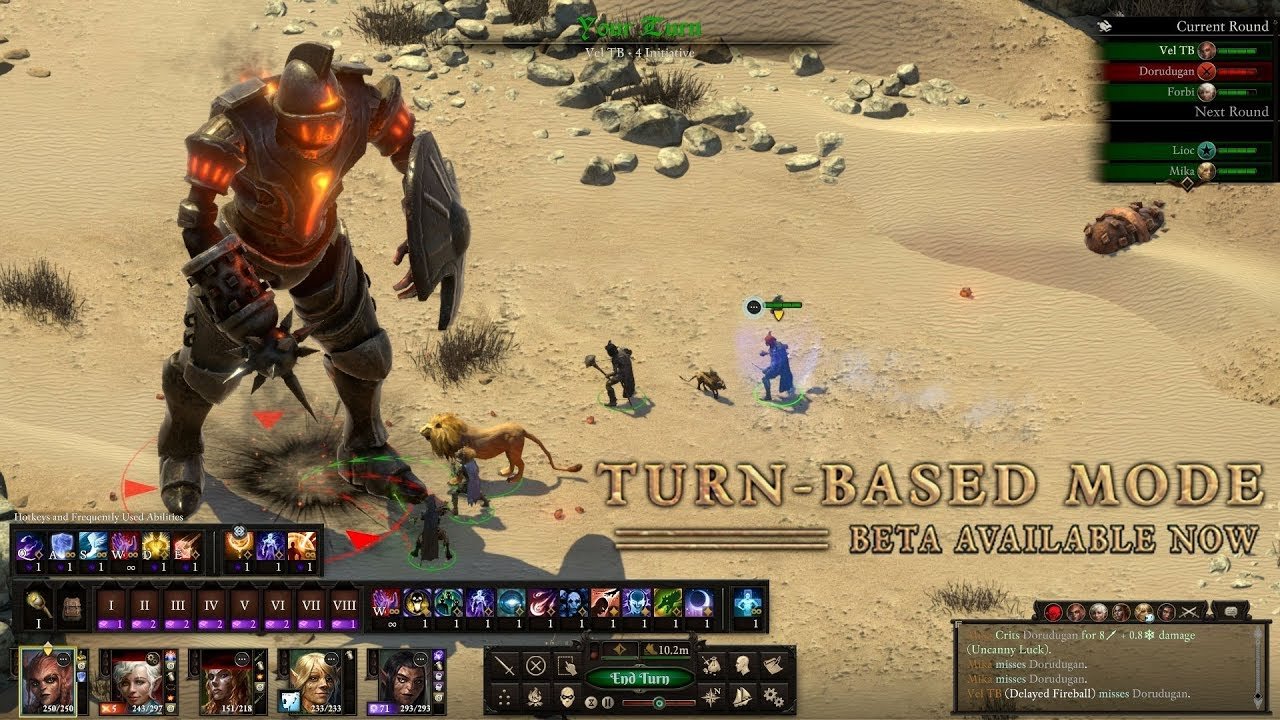
Pillars of eternity turn-based combat is the tactical overhaul that transforms one of the most complex RPGs ever made into something you can actually think through properly. If you’ve ever paused a battle seventeen times in thirty seconds, frantically clicked the wrong ability, and watched your carefully built party collapse into a confused mess you know exactly why turn-based mode exists.
Pillars of Eternity II: Deadfire added an optional turn-based combat feature, transforming the entire experience. Suddenly the game’s staggering depth became approachable. Abilities that flew past in real-time combat revealed their genuine tactical potential. Positioning mattered. Timing mattered. Every decision carried weight because you had actual time to make it.This guide covers everything the system mechanics, the best classes, positioning strategies, advanced techniques, and honest answers to every question new and veteran players ask about turn-based combat in Pillars of Eternity.
What Is Pillars of Eternity Turn-Based Combat?
The Origins of Turn-Based Mode in Pillars of Eternity
Turn-based mode didn’t ship with the original Pillars of Eternity. Obsidian Entertainment introduced it in Pillars of Eternity II: Deadfire through a free patch in January 2020 nearly two years after the base game launched.
The decision came directly from community demand. Deadfire’s real-time with pause (RTWP) system intimidated many players despite being a faithful evolution of classic Infinity Engine combat. Forums filled with requests for a slower, more deliberate alternative. Obsidian listened. They designed a complete turn-based implementation that didn’t just slow down the existing system it fundamentally restructured how combat flows.
The result surprised everyone. Turn-based mode didn’t feel like a compromise. It felt like a genuinely different game sharing the same ruleset.
Real-Time With Pause vs Turn-Based Combat
Understanding both modes helps you appreciate what turn-based actually changes. Here’s the honest breakdown:
| Feature | Real-Time With Pause | Turn-Based Mode |
| Combat flow | Continuous — pause manually | Structured rounds and turns |
| Decision pressure | High — time keeps moving | None — take as long as needed |
| Tactical depth | High but chaotic | High and methodical |
| Beginner friendliness | Steep learning curve | More accessible |
| Spell/ability appreciation | Easy to miss effects | Fully visible and countable |
| Pacing | Fast and dynamic | Slow and deliberate |
| Best for | Experienced CRPG veterans | Newcomers and tactical thinkers |
Neither mode is objectively superior. They suit different player temperaments entirely. However, turn-based combat in Pillars of Eternity gives you something RTWP simply can’t the ability to fully understand and appreciate every single mechanic the game contains.
Why Turn-Based Mode Transforms the Experience
Real-time combat in Deadfire moves fast. Dangerously fast. Abilities fire, effects stack, enemies move, and your party reacts all simultaneously. Keeping track of everything requires either remarkable experience or constant pausing.
Turn-based mode removes that chaos completely. Each character acts once per round in initiative order. You see exactly what happens, why it happens, and what options you have next. Spells that previously fired and vanished in milliseconds now show their full mechanical beauty duration in rounds, area of effect, saving throw difficulty, conditional triggers.New players especially benefit from this clarity. But veteran players find something equally valuable the ability to execute genuinely complex tactical sequences without the execution pressure of real-time play.
Understanding the Turn-Based Combat System in Pillars of Eternity
Initiative and Turn Order Explained
Initiative determines who acts when in each combat round. Higher initiative means acting earlier. Lower initiative means waiting while enemies potentially punish your positioning.
Several factors influence initiative:
- Dexterity attribute — the primary initiative driver for your characters
- Weapon weight — heavier weapons impose initiative penalties
- Armor weight — heavier armor slows initiative significantly
- Skills and aptitudes — specific class skills directly alter initiative.
- Spell casting time — longer cast time spells push your wizard’s action later in the round
Reading the turn order display at the top of your screen tells you exactly when every character and enemy acts. This information is gold. If an enemy with high damage output acts before your healer, position your healer defensively before their turn arrives. If your wizard acts before a dangerous caster enemy, prioritizing crowd control on that enemy becomes your obvious play.
“In turn-based mode, the initiative tracker isn’t just a display — it’s your strategic planning tool. Read it constantly.” Core advice shared across Pillars of Eternity tactical communities
Action Points and Action Economy
Action economy — getting maximum value from each character’s available actions per turn is the central strategic concept of Pillars of Eternity turn-based combat.
Each character gets one full action and one quick action per turn. Understanding this distinction separates competent players from great ones.
Full actions include:
- Casting most spells
- Making weapon attacks
- Using most activated abilities
- Drinking potions (in some contexts)
Quick actions include:
- Activating modal abilities
- Using certain passive triggers
- Some instant-cast buffs
- Movement in certain conditions
The strategic implication is powerful. A character who attacks with a full action can still activate a modal ability with their quick action in the same turn. A wizard who casts a spell can still reposition using their available movement. Every turn contains layered opportunity and wasting either action type costs you cumulative efficiency across a long encounter.
Rounds, Turns, and Time Units
A combat round in turn-based Pillars of Eternity represents six seconds of in-game time the same as RTWP. Every character and enemy gets exactly one turn per round. Turns proceed in initiative order until everyone has acted and then a new round begins.
This time translation matters enormously for spells and effects. A spell lasting 10 seconds in RTWP becomes approximately 2 rounds in turn-based mode. Buffs that felt permanent in real-time suddenly require active duration management when you count their remaining rounds explicitly.
Practical duration planning:
- Short buffs (10–15 seconds) — plan for 2–3 round durations
- Medium buffs (30 seconds) — expect 5 rounds of coverage
- Long buffs (60+ seconds) — comfortable for most encounters
- Per-encounter abilities — refresh each combat regardless of mode
Attacks of Opportunity
Attacks of opportunity punish careless movement in turn-based mode. When an engaged character moves away from their engager without properly disengaging, they trigger a free attack from that enemy.
Engagement rules work like this: melee characters automatically engage nearby enemies when they approach. Breaking that engagement by moving away — triggers the opportunity attack. Smart play requires either:
- Disengaging deliberately using abilities that allow safe movement
- Not engaging unnecessarily by keeping vulnerable characters away from melee range
- Using tanks to absorb engagements while fragile characters operate freely from range
Certain classes actively exploit opportunity attacks offensively. Fighters with engagement-focused builds can lock down multiple enemies simultaneously preventing them from freely repositioning to attack your backline.
Character Classes and Turn-Based Combat
Best Classes for Pillars of Eternity Turn-Based Combat
Not every class thrives equally in turn-based mode. Some shine brighter when combat slows down and tactical precision replaces reaction speed.
Fighter arguably the strongest turn-based class. Fighters gain bonus engagement slots and their action economy benefits enormously from the structured turn system. Their Constant Recovery passive heals per round naturally and their defensive capabilities make them reliable anchors for any turn-based composition.
Wizard turns into an absolute monster in turn-based mode. Spell selection, targeting, and sequencing all improve dramatically when you have unlimited time to think. A wizard’s crowd control arsenal Bewildering Spectacle, Gaze of the Adragan, Wall of Many Colors defines encounters when applied with precision.Cipher generates focus through weapon attacks and spends it on powerful mental abilities. Turn-based mode makes focus management intuitive and transparent where RTWP makes it frantic and easy to mismanage.Priest buff timing reaches its full potential in turn-based play. Pre-combat buffs, reactive heals, and powerful offensive spells all benefit from the deliberate pace of turn-based encounters.Paladin exceptional defensive anchor with reliable per-encounter abilities that refresh constantly. Lay on Hands becomes a precision healing tool rather than a panic button.
Classes That Need More Work in Turn-Based Mode
Some classes face genuine challenges when combat slows down:
Chanter generates phrases over time and turn-based mode slows phrase accumulation significantly. Invocations that powered up quickly in RTWP now require patient multi-round investment. The solution? Focus on chants with powerful passive auras rather than waiting for expensive invocations.
Rogue — thrives on flanking and sneak attack conditions that require careful positioning setup in turn-based mode. The solution is pairing rogue with a class that creates the conditions for sneak attacks reliably — Rogue/Ranger with a pet providing flanking support works particularly well.
Best Multi-Class Combinations for Turn-Based Combat
| Multi-Class Combo | Strength | Why It Works |
| Fighter / Wizard | Offensive tanking | Fighter durability + Wizard CC and damage |
| Paladin / Chanter | Sustain anchor | Healing auras + defensive invocations |
| Cipher / Rogue | Burst damage | Focus-powered abilities + sneak attack |
| Priest / Fighter | Frontline support | Buffs + engagement control |
| Ranger / Rogue | Ranged burst | Pet flanking + sneak attack from safety |
| Monk / Wizard | Wound-powered casting | Wounds generate resources for both sides |
Turn-Based Combat Strategy and Tactics
Positioning and Terrain
Positioning is everything in turn-based Pillars of Eternity combat. Unlike RTWP where you can reactively reposition mid-chaos, turn-based mode rewards pre-combat formation planning and deliberate movement each turn.
Before combat begins, arrange your party formation consciously:
- Tanks and fighters at the front they engage enemies and prevent backline access
- Melee DPS behind tanks close enough to engage but not leading the charge
- Ranged and casters at maximum distance wizards and priests need protection above all
- Rogue on the flank positioned for flanking bonus without drawing primary attention
Chokepoints transform difficult encounters into manageable ones. Doorways, narrow corridors, and bridge crossings funnel multiple enemies into single-file approaches that your frontline handles sequentially rather than simultaneously. Finding and exploiting these environmental advantages is legitimate tactical thinking — not cheating.
Crowd Control — The Undisputed King
If positioning is everything, crowd control (CC) is the crown. In turn-based combat, removing enemies from action entirely changes the mathematical reality of an encounter. An enemy who can’t act isn’t a threat. Four enemies reduced to two active threats doubles your effective combat advantage instantly.
Most powerful CC options in turn-based mode:
- Gaze of the Adragan (Wizard) — Petrify on failed Fortitude, removes enemy from combat entirely
- Bewildering Spectacle (Wizard) — Confused enemies attack allies or stand idle
- Puppet Master (Cipher) — Dominated enemy fights for your side temporarily
- Binding Web (Ranger) — Immobilizes multiple enemies in an area
- Devotions for the Faithful (Priest) — Debuffs enemy accuracy and defenses simultaneously
- Mental Binding (Cipher) — Paralyze on failed Will save
Stacking CC works beautifully in turn-based mode. Apply a Dazed condition first to lower Will defense and then follow with a Will-targeting hard CC ability for dramatically improved success rates.
Buff and Debuff Management
Pre-combat buffing reaches its strategic zenith in turn-based mode. Before triggering combat, cast every duration-appropriate buff on your party. By the time enemies act, your team operates at full augmented capacity.
Essential pre-combat buffs:
- Devotions for the Faithful — accuracy and damage bonus for entire party
- Champion’s Boon — +20 accuracy to one character
- Scrolls of Defense — deflection bonus from consumables
- Arcane Veil (Wizard self-buff) — massive deflection boost for the first hit
Powerful debuffs to prioritize:
| Debuff | Effect | Best Target |
| Weakened | -5 to all defenses | High-defense enemies |
| Dazed | -10 Perception, -1 action | High-accuracy enemies |
| Flanked | -10 Deflection | Any melee enemy |
| Terrified | -20 to all defenses, forces retreat | Boss encounters |
| Blinded | -20 Accuracy, -4 Perception | High-damage attackers |
Turn-Based Combat Tips for Beginners
Essential Settings to Configure
Before your first turn-based battle, adjust these settings for the best experience:
- Enable turn-based mode in gameplay settings before starting combat
- Set camera to overhead view for better tactical awareness of the battlefield
- Slow down AI turn animations — watching enemy actions helps you learn their patterns
- Enable floating combat text — seeing damage numbers and status effects teaches the system fast
- Start on Normal difficulty — Path of the Damned turn-based exists for masochists only
Most Common Beginner Mistakes
Every new Pillars of Eternity turn-based player makes these errors. Knowing them in advance saves considerable frustration:
- Ignoring engagement rules — moving engaged characters freely and eating constant opportunity attacks
- Using full actions on weak attacks when powerful abilities are available
- Neglecting pre-combat formation — charging in without positioning your party
- Forgetting quick actions — leaving bonus actions unused every single turn
- Over-relying on auto-attack — basic attacks are almost always your worst full action option
- Ignoring the initiative tracker — not planning ahead for upcoming enemy turns
- Wasting CC on already-controlled enemies — redundant CC wastes precious resources
Understanding Accuracy and Defenses
The attack resolution system in Pillars of Eternity uses four defensive stats:
| Defense Type | Protects Against | Primary Attribute |
| Deflection | Most weapon attacks | Resolve |
| Fortitude | Physical effects, Might/Con spells | Might + Constitution |
| Reflex | Area effects, explosions | Dexterity + Perception |
| Will | Mental effects, Intellect spells | Intellect + Resolve |
Every attack roll produces one of four outcomes: Miss, Graze, Hit, or Critical Hit. The difference between your accuracy and the enemy’s relevant defense determines the probability distribution across these outcomes. Higher accuracy shifts results toward hits and crits. Debuffing enemy defenses achieves the same improvement from the opposite direction.
Advanced Turn-Based Combat Techniques
Action Economy Exploitation
Masters of Pillars of Eternity turn-based combat think about every turn as an action economy puzzle. The goal is squeezing maximum output from every character every round.
Advanced action economy techniques:
- Haste effects grant bonus actions and represent some of the highest-value buffs in turn-based mode
- Swift Strikes (Monk) generates a bonus quick attack alongside regular actions
- Disciplined Strikes (Fighter) combines accuracy buff with attack in efficient sequence
- Efficient Alchemy (Alchemist subclass) reduces potion use to quick actions instead of full actions
- Cleaving Stance (Fighter) generates bonus attacks on kill — devastating in groups of weak enemies
Devastating Combo Chains
Turn-based mode enables multi-character combo sequences that RTWP players never execute reliably:
The Classic Setup:
- Wizard casts Miasma of Dull-Mindedness — reduces enemy Intellect and Resolve (lowers Will defense)
- Cipher follows with Mental Binding — Paralyze targeting now-weakened Will defense
- Fighter moves into flanking position on paralyzed enemy — triggers Flanked condition (-10 Deflection)
- Rogue attacks paralyzed, flanked enemy — Sneak Attack and Deathblows activate simultaneously
- Result — catastrophic single-target damage on an enemy that cannot respond
This sequence requires four characters acting in coordination. In RTWP, executing it perfectly is nearly impossible. In turn-based mode, it’s routine.
Pillars of Eternity Turn-Based Combat vs Other CRPGs
Turn-Based Comparison Across CRPGs
| Feature | PoE II Turn-Based | Baldur’s Gate 3 | Divinity Original Sin 2 |
| Initiative System | Dexterity-based | D&D 5e roll-based | Speed stat based |
| Action Economy | Full + Quick action | Action + Bonus Action | Action Points pool |
| CC Importance | Extremely high | Very high | High |
| Environmental Interaction | Limited | Extensive | Extensive |
| Positioning Mechanics | Engagement-based | Opportunity attacks | Free movement |
| Tactical Depth | Very high | Very high | High |
| Beginner Friendliness | Moderate | High | Moderate |
Baldur’s Gate 3 offers richer environmental interaction and a more familiar D&D framework. Divinity: Original Sin 2 excels at elemental combo systems. But Pillars of Eternity turn-based combat arguably offers the deepest pure class mechanics and ability interactions of any CRPG — the sheer number of abilities, conditions, and synergies exceeds both competitors significantly.
Frequently Asked Questions
Is Turn-Based Mode Available in Pillars of Eternity 1?
No. Turn-based mode only exists in Pillars of Eternity II: Deadfire. The original Pillars of Eternity uses exclusively real-time with pause combat. Obsidian added turn-based as a free patch update to Deadfire in January 2020.
Can You Switch Between Turn-Based and Real-Time With Pause?
Yes — but only outside of active combat. You can toggle between modes in the gameplay settings menu between encounters. Switching mid-combat isn’t supported so commit to your chosen mode before engaging enemies.
Is Turn-Based Mode Harder Than Real-Time With Pause?
It depends entirely on your playstyle. Turn-based mode removes execution pressure but demands stronger tactical planning. Players who struggle with RTWP’s pace often find turn-based easier overall. Experienced RTWP players sometimes find turn-based harder because enemy AI plays more consistently when given structured turns.
What Is the Best Class for Turn-Based Combat?
Fighter and Wizard consistently rank as the strongest turn-based classes. Fighter’s engagement control and defensive durability anchor any composition while Wizard’s crowd control and damage ceiling scales magnificently with the tactical precision turn-based allows.
Does Turn-Based Mode Affect Story or Dialogue?
Not at all. Turn-based mode exclusively affects combat encounters. Every story beat, dialogue option, and narrative choice remains completely identical regardless of combat mode selection.
Are There Disadvantages to Using Turn-Based Mode?
Honestly, yes. Turn-based mode makes Chanter significantly weaker due to slow phrase generation. Some builds designed around RTWP ability chains don’t translate elegantly. And certain players simply find turn-based pacing too slow for enjoyable long-term play — personal preference genuinely matters here.
Conclusion
Pillars of Eternity turn-based combat isn’t a simplified alternative to real-time with pause. It’s a genuinely different tactical experience built on the same magnificent mechanical foundation. The deliberate pace reveals depths that RTWP’s chaos can obscure action economy, CC sequencing, positioning precision, and multi-character combo execution all reach their fullest expression when you have time to think.
Start on Normal difficulty. Build a Fighter anchor and a Wizard. Learn initiative management and crowd control priority. Master those fundamentals and the game opens up into one of the most rewarding tactical RPG experiences available anywhere.
Every battle becomes a puzzle. And Pillars of Eternity turn-based mode gives you all the time in the world to solve it.