
Understanding whether glasses prescriptions and contact lens prescriptions are the same matters more than most people realize. Many think they can order contacts using their eyeglass prescription only to find out they can’t. The truth is simple. The two prescriptions look similar on paper, yet they differ in structure, measurements, design, and safety requirements. When you look closely, you discover why an eye doctor must write separate prescriptions for each.
This guide walks you through everything in detail. You’ll learn how eyeglass and contact prescriptions differ, how optometrists determine the right lens power, and why trying to convert your glasses prescription into a contact prescription at home can be risky. You’ll also see examples, tables, real-life cases, and explanations written in a clear, easy-to-follow style.
Understanding the Basics — What Is a Glasses Prescription vs a Contact Lens Prescription?
What Is a Glasses Prescription (Eyeglass Prescription Explained)?
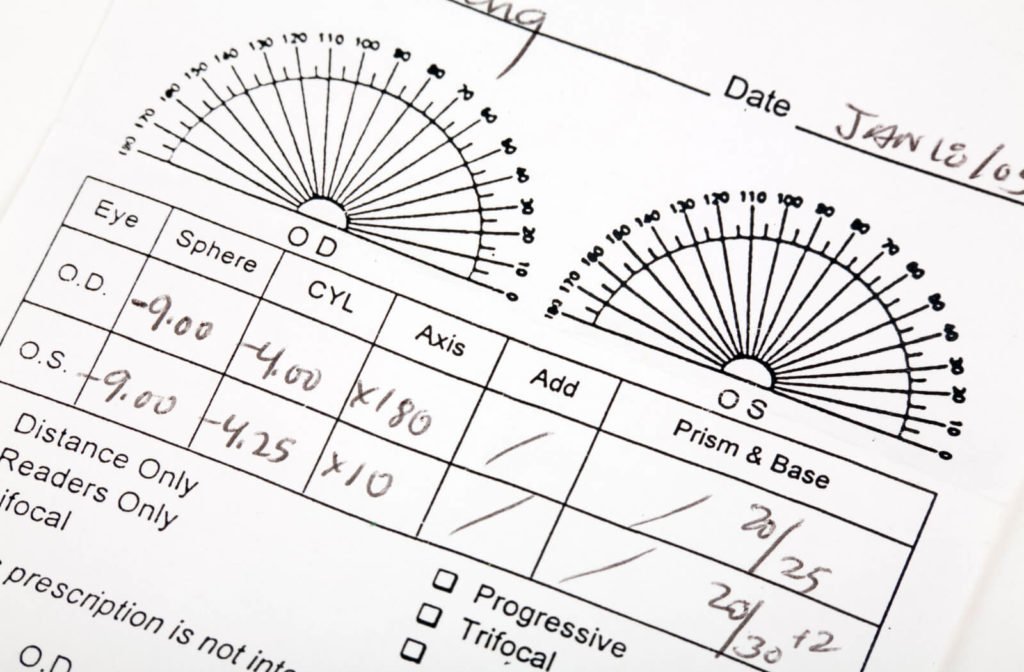
A glasses prescription tells you the power your lenses need to correct your vision when the lenses sit slightly away from your eyes. This distance, known as vertex distance, usually measures between 12–14 mm. Eyeglasses stay in front of your eyes rather than touching them. That small space changes how light bends as it enters your eye.
An eyeglass prescription includes values like:
- SPH (Sphere) – measures nearsightedness or farsightedness
- CYL (Cylinder) – measures astigmatism
- AXIS – direction of astigmatism
- ADD – magnifying power for multifocals
These numbers define your optical correction, yet they don’t define the fit of a lens on your eye. That’s why this prescription alone cannot be used to buy contact lenses.
What a Contact Lens Prescription Includes (And Why It’s Different)
A contact lens prescription goes beyond optical power. It includes the measurements required to fit a medical device directly on the surface of your cornea. Contacts sit directly on the tear film, so precision matters. Even slight mismatches can cause irritation, blurred vision, hypoxia (reduced oxygen), or infections.
A contact prescription includes:
- SPH, CYL, AXIS (like glasses)
- BC (Base Curve) — determines how the lens curves
- DIA (Diameter) — defines the width of the lens
- Lens Material & Brand — each behaves differently
- Expiration Date — regulated for safety
In short, a contact prescription is both a vision correction formula and a fit specification for a medical device.
Are Glasses Prescriptions and Contact Prescriptions the Same? (Short Answer: No)
Key Differences at a Glance
Here’s a quick chart showing why glasses vs contact lens prescriptions are not interchangeable:
| Feature | Glasses Prescription | Contact Lens Prescription |
| Lens Distance | 12–14 mm away from the eye | Directly on the cornea |
| Includes Fit Measurements | No | Yes (BC, DIA, material) |
| Brand/Material Required | No | Yes |
| Oxygen Permeability Considered | Not needed | Crucial |
| Interchangeable? | No | No |
| Medical Device Regulation | Minimal | Strict FDA compliance |
Why the Two Prescriptions Can’t Be Interchanged
Even though both prescriptions correct vision, the physics of light changes when the lens sits directly on the eye. Contacts require precise curvature and diameter to match your corneal shape. Eyeglasses don’t. Using one prescription for the other would produce inaccurate vision and potential discomfort.
How Lens Distance Changes Prescription Strength
The Role of Vertex Distance
When a lens moves closer or farther from the eye, the effective power changes. This is especially noticeable in moderate-to-high prescriptions. For example, if your glasses prescription is −6.00, your contact lens power will often be slightly lower because the lens rests directly on your eye.
Why Nearsighted and Farsighted Prescriptions Change Between Formats
- Nearsighted (minus lenses): Contact lens power decreases
- Farsighted (plus lenses): Contact lens power increases
The physics behind this lies in refraction. Light bends differently depending on the lens’s distance from the cornea.
Example Table Showing Power Differences
| Glasses Power | Typical Contact Power |
| −2.00 | −2.00 |
| −4.00 | −3.75 |
| −6.00 | −5.50 |
| +2.00 | +2.25 |
| +4.00 | +4.50 |
These values vary slightly by person, but the trend remains consistent.
Measurements Unique to a Contact Lens Prescription
Base Curve (BC)
A measure of the lens’s curvature. Too flat or too steep can cause discomfort, redness, or movement issues.
Diameter (DIA)
Even a 0.1 mm difference can affect lens movement, tear exchange, and visual stability.
Lens Material & Brand
Manufacturers use different materials, water content levels, oxygen permeability indexes, and coatings. That’s why contact prescriptions list specific brands.
Fit Assessment for Comfort and Oxygen Flow
Optometrists assess:
- Lens centration
- Movement with blinking
- Tear exchange
- Corneal oxygenation
This is why fittings cannot be skipped.
Glasses vs Contact Lens Prescription Example Chart
| Component | Glasses Prescription | Contact Lens Prescription |
| SPH | ✔ | ✔ |
| CYL | ✔ | ✔ |
| AXIS | ✔ | ✔ |
| ADD | ✔ | ✔ |
| BC | ✘ | ✔ |
| DIA | ✘ | ✔ |
| Lens Material | ✘ | ✔ |
| Brand Required | ✘ | ✔ |
| FDA Regulation | Low | High |
How Optometrists Determine the Right Contact Prescription
Step-by-Step Conversion Process
- Evaluate the glasses prescription
- Measure corneal shape
- Calculate vertex adjustment
- Select trial lenses
- Assess fit and movement
- Fine-tune power
- Finalize prescription
Why Contacts Require a Fitting Appointment
A precise fit protects your cornea from:
- Hypoxia
- Abrasion
- Infection
- Gritty sensations
- Vision distortion
Risks of Skipping a Professional Fitting
Skipping a fitting can lead to:
- Blurry vision
- Pain
- Redness
- Swelling
- Corneal ulcers
A small mistake can cause big problems because contacts touch living tissue.
Can You Convert a Glasses Prescription to a Contact Prescription Yourself?
Why Online Calculators Are Inaccurate
Online tools don’t account for:
- Corneal curvature
- Tear chemistry
- Individual anatomy
- Lens material differences
Safety Concerns with DIY Conversion
Self-converting can result in:
- Eye strain
- Headaches
- Incorrect power
- Infections from poor fit
When an Optometrist Must Re-Evaluate Your Eyes
You’ll need a real exam when:
- You change lens type
- You change brands
- Your prescription changes
- Your eyes feel irritated
- You experience dryness
Common Questions Patients Ask About Glasses vs Contact Prescriptions
Why do my contact lenses feel stronger than my glasses?
Contacts sit directly on the eye, so the focal point shifts. That change can make them feel stronger even when the numbers differ slightly.
Why can’t I order contacts with my glasses prescription?
Because glasses prescriptions lack BC, DIA, and brand specifics.
Are contact lens prescriptions more expensive?
Yes, due to materials, medical regulations, and fitting appointments.
How often do I need a new contact lens exam?
Usually once a year, sometimes sooner if symptoms appear.
Special Cases Where Glasses and Contact Prescriptions Differ Even More
High Myopia or High Hyperopia
Large differences between glasses and contact lens power appear in higher ranges.
Astigmatism and Toric Lenses
Toric contacts include rotation stability parameters not found in glasses.
Presbyopia and Multifocal Contacts
Contacts use different optical zones requiring precise fitting.
Keratoconus and Specialty Lenses
Patients need custom scleral or rigid lenses with highly specialized measurements.
The Legal Side — Why Contact Prescriptions Are Regulated Differently
FDA and FCLCA Requirements
Contacts are classified as medical devices. Regulations protect consumers from unsafe fitting.
Patient Safety Considerations
Improper fitting can cause long-term corneal damage.
Expiration Rules
Contacts often have shorter expiration dates to ensure ongoing safety.
How to Read Your Glasses and Contact Prescriptions
Breaking Down SPH, CYL, AXIS
These define refractive errors.
Understanding ADD for Multifocals
Indicates extra power for reading zones.
How to Decode BC, DIA, Material Codes
Each ensures the lens interacts safely with your cornea.
Which Is Better: Glasses or Contacts?
Pros and Cons of Glasses
Pros:
- Low risk
- No touching the eye
- Cheaper over time
Cons:
- Can fog up
- Limited peripheral clarity
Pros and Cons of Contacts
Pros:
- Wide field of vision
- No fogging
- Great for sports
Cons:
- Require hygiene
- Higher maintenance
- Medical risks if misused
When to Switch Between the Two
Switch when lifestyle, comfort, or eye health changes.
Final Verdict — Are Glasses and Contact Lens Prescriptions the Same?
Clear Summary of Differences
They correct the same refractive errors but differ in structure, measurements, and safety.
What Patients Should Remember
A glasses prescription helps you see.
A contact prescription helps you see safely.
Checklist
- Don’t convert prescriptions yourself
- Schedule proper fittings
- Follow expiration dates
- Monitor comfort and clarity
Conclusion — Making the Right Choice for Your Eyes
Choose glasses for simplicity and safety. Choose contacts for freedom and convenience. The key is an updated exam, proper fitting, and a prescription tailored to your anatomy. When both tools work together, you get reliable vision and long-term comfort.
Hi,
I was checking your website, and saw you have a good design and it looks great, but it’s not ranking on Google and other major search engines.
With your permission : I would like to send you a SEO Proposal with prices showing you a few things to greatly improve these search results for you. These things are not difficult.
It will show you exactly what needs to be done to move you up in the rankings dramatically.
May I send you a best quote?
Thanks,
Sabia Khan
i need backlinks