
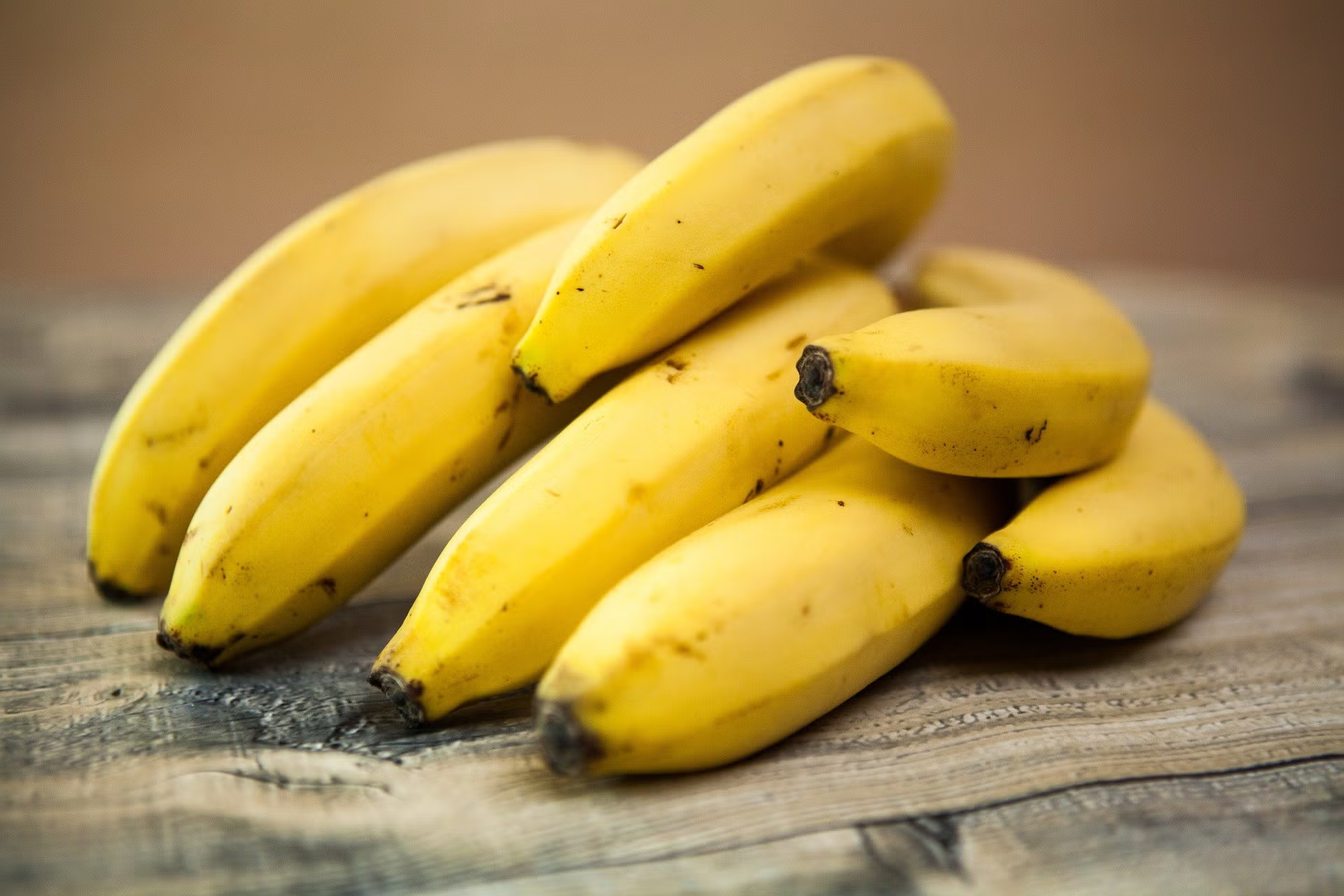
Bananas are one of the most widely consumed fruits in the world. They are not only sweet and delicious but also packed with essential nutrients, making them a staple in many diets. Whether you eat them as a snack, in smoothies, or as part of a meal, knowing how many calories are in a half banana is crucial for anyone tracking their diet, managing weight, or simply making healthier food choices.
In this comprehensive guide, we’ll dive deep into banana calories, nutritional benefits, health advantages, comparisons with other foods, common myths, and creative ways to enjoy a half banana. By the end, you’ll understand why half a banana is a powerful yet low-calorie option for your daily nutrition.
1. How Many Calories Are in a Half Banana?
A medium banana usually contains about 105 calories, which means a half banana provides approximately 50–55 calories. This makes it an ideal low-calorie snack or portion-controlled addition to your meals.
Factors Influencing Calorie Content
- Size of the Banana: Small bananas (~6 inches) contain around 90 calories, medium bananas (~7 inches) have 105 calories, and large bananas (~8 inches) contain roughly 120 calories. A half banana, therefore, has calories proportionate to its size.
- Ripeness: Riper bananas have slightly higher sugar content, which can slightly increase calorie content.
- Variety: Yellow Cavendish bananas are most common, but red, baby, and plantain varieties have slightly different calorie counts.
Table: Calories in Half a Banana by Size
| Banana Size | Full Banana Calories | Half Banana Calories |
| Small (6″) | 90 | 45 |
| Medium (7″) | 105 | 52 |
| Large (8″) | 120 | 60 |
Knowing these numbers allows you to plan snacks and meals accurately, especially if you are tracking macros or calories.
2. Nutritional Breakdown of Half a Banana
Calories are just one part of the picture. Bananas are rich in essential nutrients that provide numerous health benefits.
2.1 Carbohydrates
A half banana contains roughly 13 grams of carbohydrates, primarily natural sugars: fructose, glucose, and sucrose. These natural sugars provide a quick energy boost without the spike associated with processed sugars.
2.2 Fiber
Half a banana contains about 1.5 grams of dietary fiber, which supports digestion, improves bowel movements, and helps you feel fuller longer. Fiber is also linked to better blood sugar control.
2.3 Vitamins and Minerals
Half a banana is a significant source of important vitamins and minerals:
- Potassium: ~200–225 mg – regulates heart function, blood pressure, and fluid balance.
- Vitamin C: ~5% of the Daily Value (DV) – supports immunity and skin health.
- Vitamin B6: ~8% DV – essential for metabolism and brain health.
- Magnesium: ~4% DV – important for muscle function and bone health.
Table: Nutritional Value of Half Banana
| Nutrient | Amount per Half Banana | Benefits |
| Calories | 50–55 kcal | Quick energy |
| Carbohydrates | 13 g | Energy and brain fuel |
| Fiber | 1.5 g | Digestive health and satiety |
| Potassium | 200–225 mg | Heart and muscle support |
| Vitamin C | 5% DV | Immune and skin health |
| Vitamin B6 | 8% DV | Brain and metabolism support |
| Magnesium | 4% DV | Muscle and bone health |
3. Health Benefits of Half a Banana
Eating half a banana provides a range of health benefits, making it a nutritious snack or meal addition.
3.1 Heart Health
Potassium in bananas is essential for maintaining normal heart function. Studies show that diets high in potassium reduce the risk of high blood pressure, stroke, and heart disease.
3.2 Digestive Support
Bananas contain dietary fiber and resistant starch, especially when slightly underripe. These compounds act as prebiotics, feeding beneficial gut bacteria and improving digestive health.
3.3 Energy Boost
A half banana is perfect for a quick energy boost. Its natural sugars are quickly absorbed by the body, providing a fast source of energy before workouts or during busy days.
3.4 Weight Management
At only 50–55 calories, half a banana is a low-calorie snack that satisfies sweet cravings while providing nutrients. Pairing it with protein or healthy fats can increase satiety and reduce overeating.
3.5 Muscle and Bone Health
Potassium and magnesium support muscle contractions, prevent cramps, and contribute to strong bones. Athletes often eat bananas before or after exercise for recovery.
3.6 Blood Sugar Control
Despite containing natural sugars, bananas have a low to moderate glycemic index, meaning they cause gradual increases in blood sugar. Combining half a banana with protein or fiber-rich foods stabilizes blood sugar even further.
4. Factors That Affect Banana Calories
While half a banana is relatively consistent in calories, several factors can affect the final calorie count:
- Ripeness: Ripe bananas are sweeter due to more sugar conversion from starch.
- Cooking Methods: Baking or boiling doesn’t significantly alter calories, but frying or adding sugar increases calories.
- Variety: Red bananas, baby bananas, and plantains differ slightly in calorie content.
- Portion Size: Always measure your portion if precise calorie tracking is needed.
5. Half Banana vs. Other Snacks
Comparing a half banana to other popular snacks highlights its low-calorie, nutrient-dense benefits.
Table: Calories and Nutrients Comparison
| Snack | Calories | Fiber | Sugar | Notes |
| Half Banana | 50–55 | 1.5 g | 7 g | Natural sugar, fiber-rich |
| Medium Apple | 50–60 | 2 g | 10 g | Slightly more fiber |
| Carrot Sticks (1 cup) | 50 | 3 g | 5 g | Low sugar, crunchy |
| Oreo Cookie (1 piece) | 53 | 0.5 g | 5 g | Processed sugar |
| Granola Bar (1 bar) | 100–120 | 2–3 g | 12 g | Higher sugar & calories |
Half a banana is clearly a healthier option for anyone wanting energy, fiber, and essential nutrients without excess calories.
6. Creative Ways to Eat Half a Banana
Half a banana isn’t just a snack on its own; it can be used creatively in meals and desserts.
6.1 Breakfast Ideas
- Smoothies: Half a banana, almond milk, spinach, and a scoop of protein powder.
- Oatmeal Topping: Slice half a banana over oats with cinnamon and chia seeds.
- Toast: Whole-grain toast with peanut butter and banana slices.
6.2 Snacks
- Half a banana with Greek yogurt and nuts.
- Banana slices with a sprinkle of dark chocolate or cocoa powder.
- Freeze half a banana for a creamy, ice cream-like treat.
6.3 Desserts
- Mash half a banana to naturally sweeten muffins or pancakes.
- Blend with cocoa powder and yogurt for pudding.
- Use half a banana in fruit parfaits with berries and granola.
6.4 Smoothies and Shakes
Adding half a banana to smoothies provides sweetness, creaminess, and a natural energy boost without adding processed sugar.
7. Common Myths About Bananas
There are several myths surrounding bananas that need clarification:
- Bananas are fattening: Half a banana is only ~50 calories, far from fattening.
- Bananas spike blood sugar: When eaten with protein or fiber, they are safe for blood sugar control.
- Only full bananas count for nutrition: Even half a banana provides essential vitamins, minerals, and fiber.
- Bananas aren’t suitable for weight loss: Low in calories and high in nutrients, they are excellent for controlled diets.
8. FAQs About Half Banana Calories
Q1: How do small and large bananas differ in calories?
A: Half a small banana has ~45 calories, a medium ~52 calories, and a large ~60 calories.
Q2: Does ripeness affect calories?
A: Slightly. Riper bananas have more sugars, marginally increasing calories.
Q3: Can I eat half a banana at night?
A: Yes, it’s low-calorie, fiber-rich, and helps satisfy sweet cravings.
Q4: Are bananas better than other fruits?
A: They provide potassium, fiber, and quick energy, making them highly convenient and nutritious.
Q5: How can I include half a banana in a weight-loss diet?
A: Pair with protein or healthy fats for a satisfying low-calorie snack. Use in smoothies, oatmeal, or yogurt parfaits.
9. Practical Tips for Eating Half a Banana
- Measure Portions: Use small bananas for more precise calorie control.
- Pair with Protein: Peanut butter, Greek yogurt, or cottage cheese slows digestion and keeps you full.
- Freeze: Use frozen half bananas for smoothies or desserts.
- Track Intake: Use apps to monitor calories and macro intake.
- Combine with Fiber: Oatmeal, nuts, or seeds enhance satiety and digestion.
Pro Tip: Combining half a banana with high-protein foods creates a balanced snack that controls hunger and maintains steady energy.
10. Conclusion
A half banana is a low-calorie, nutrient-dense, and versatile food. With only 50–55 calories, fiber, potassium, vitamins, and natural sugars, it’s perfect for energy, weight management, and overall health.
Half a banana can be eaten as a snack, added to breakfast, or used in creative recipes. Its natural sweetness, combined with essential nutrients, makes it a smart choice for anyone aiming for a balanced diet. Understanding how many calories are in a half banana allows you to make informed choices and enjoy this delicious fruit without overthinking your diet.